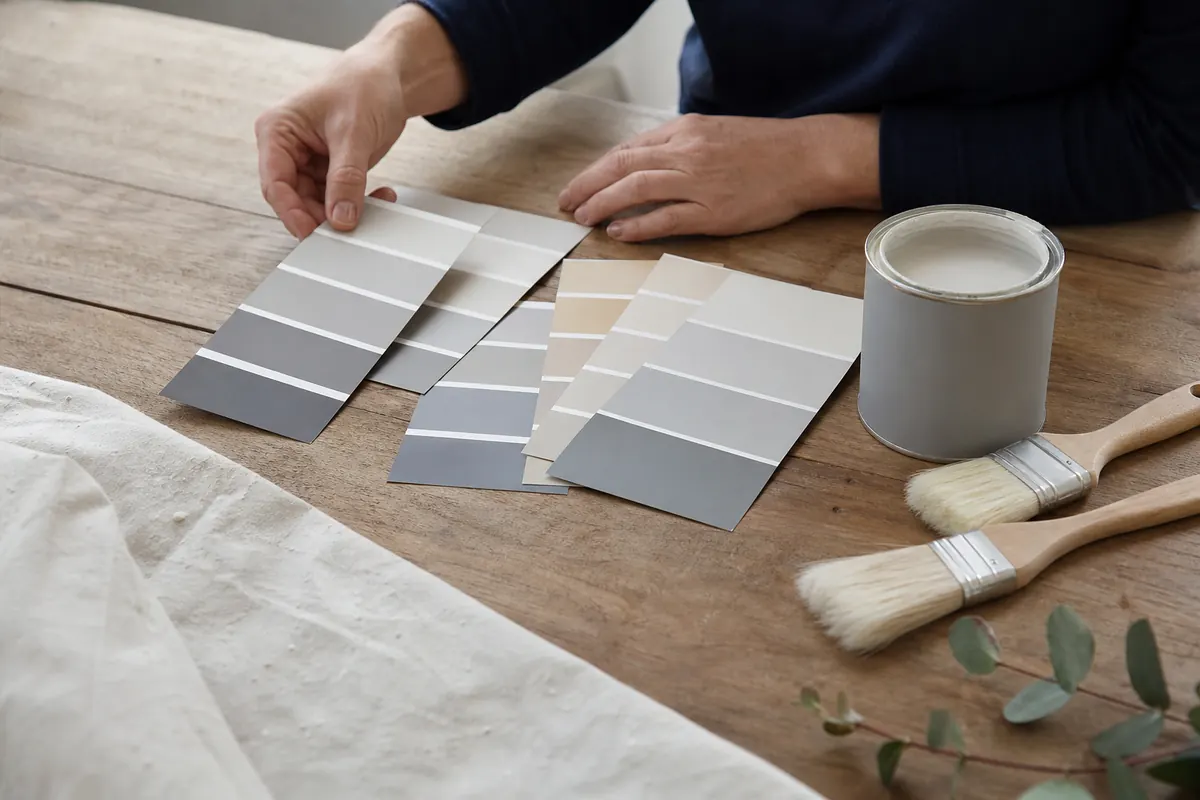
Doors get noticed first
A door is one of the smallest surfaces on a house and one of the most looked-at. Guests see the front door before anything else, and everyone in the home touches interior doors dozens of times a day. That combination makes doors a good place to spend a little effort, because a fresh door changes how the whole entry feels.
This guide covers both ends of the job: the front entry that sets the tone for the property, and the interior doors that wear the most. The principles are similar, but the finish, the prep and the weather concerns are different.
Front door colour ideas
The front door is where a house can carry a stronger colour than the walls around it. Because it is a small area, a bolder shade rarely overwhelms. It is also a way to bring in a colour you like without committing a whole wall to it.
- Deep blues and greens look settled against light siding or brick.
- A dark charcoal or near-black reads crisp and traditional against pale trim.
- A warm red gives a clear focal point on a neutral house.
- Soft grey-greens and muted blues suit a calm, understated look.
- A natural wood stain suits a solid wood door that is in good shape and gets limited sun.
- White or a soft off-white keeps things clean when the house has strong colour elsewhere.
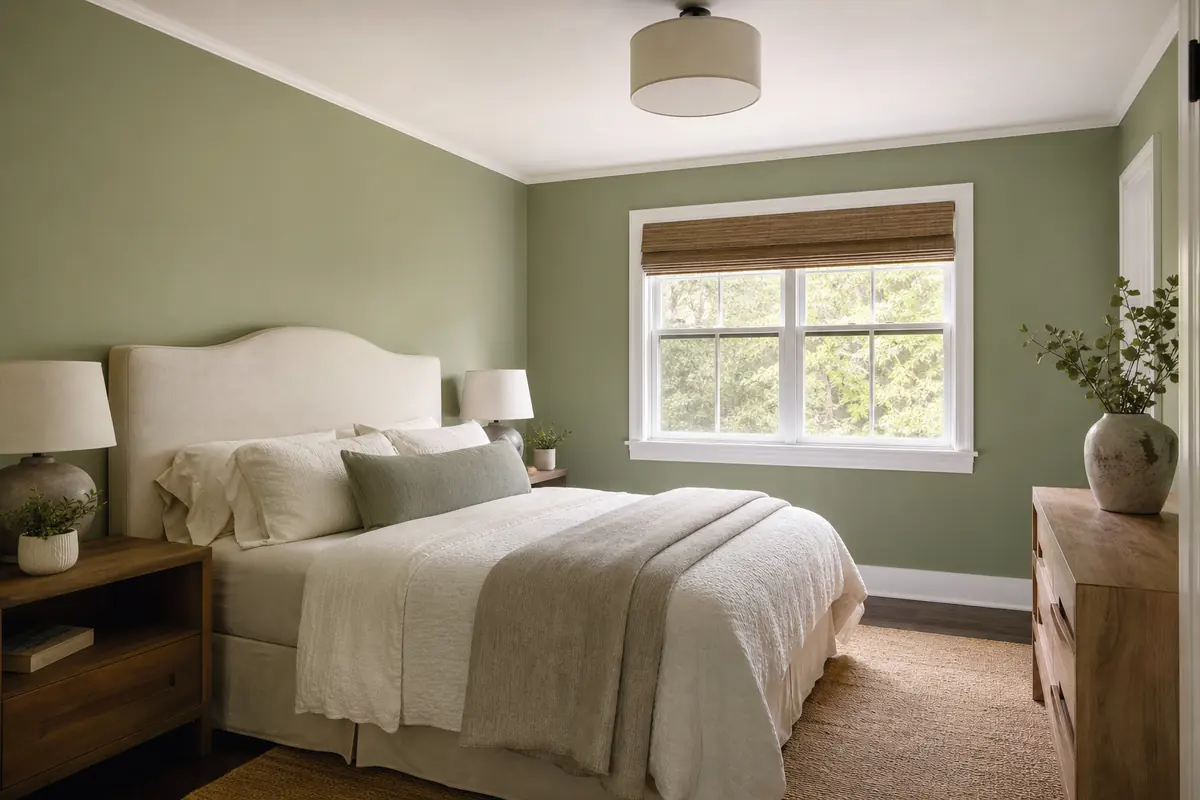
Look at the whole front, not just the door
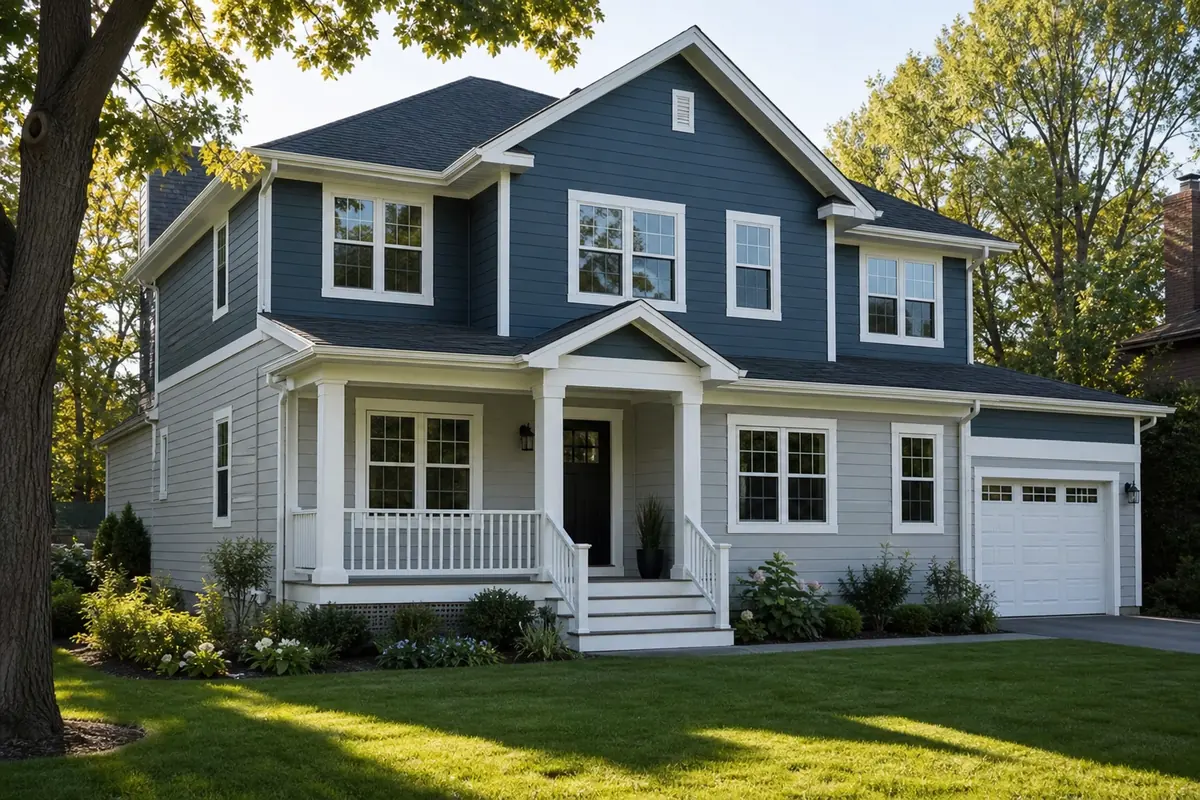
Stand across the street and look at the house. The door colour has to work with the roof, the siding or brick, the garage door, the trim and any stonework. A colour with a yellow undertone can clash with a cool grey wall, and a colour with a blue undertone can look flat next to warm brick.
Hold sample cards or paint a large test board and lean it against the door. Check it in morning light, at midday and in the evening, because exterior light changes more than interior light does. If the door sits in a shaded porch, it will look darker than the same colour in full sun.
Interior doors: keep them quiet or make them a feature
Most interior doors are painted the same colour as the trim, usually a white or soft neutral, because it ties the house together and makes the rooms feel consistent. That is the safe choice, and it works well for a clean look.
If you want something different, paint doors a shade or two darker than the walls, or choose one deeper colour for all of them. A dark door on a pale wall gives the hallway a framed look. Whatever you pick, use the same colour across the whole floor so the hallway does not look like a patchwork.
Choosing a finish that holds up
Doors take more physical wear than walls. Hands, bags, pets and cleaning all leave marks, so a harder, more washable sheen is the usual call. Semi-gloss is the common choice for both interior and exterior doors, since it wipes clean and resists scuffs. Satin gives a softer look with decent durability if you prefer less shine.
Be aware that a glossier finish also shows every dent, brush mark and dust speck underneath. That is why prep matters more on a door than on almost any other surface. A door with a flawed surface will look worse in semi-gloss than in satin.
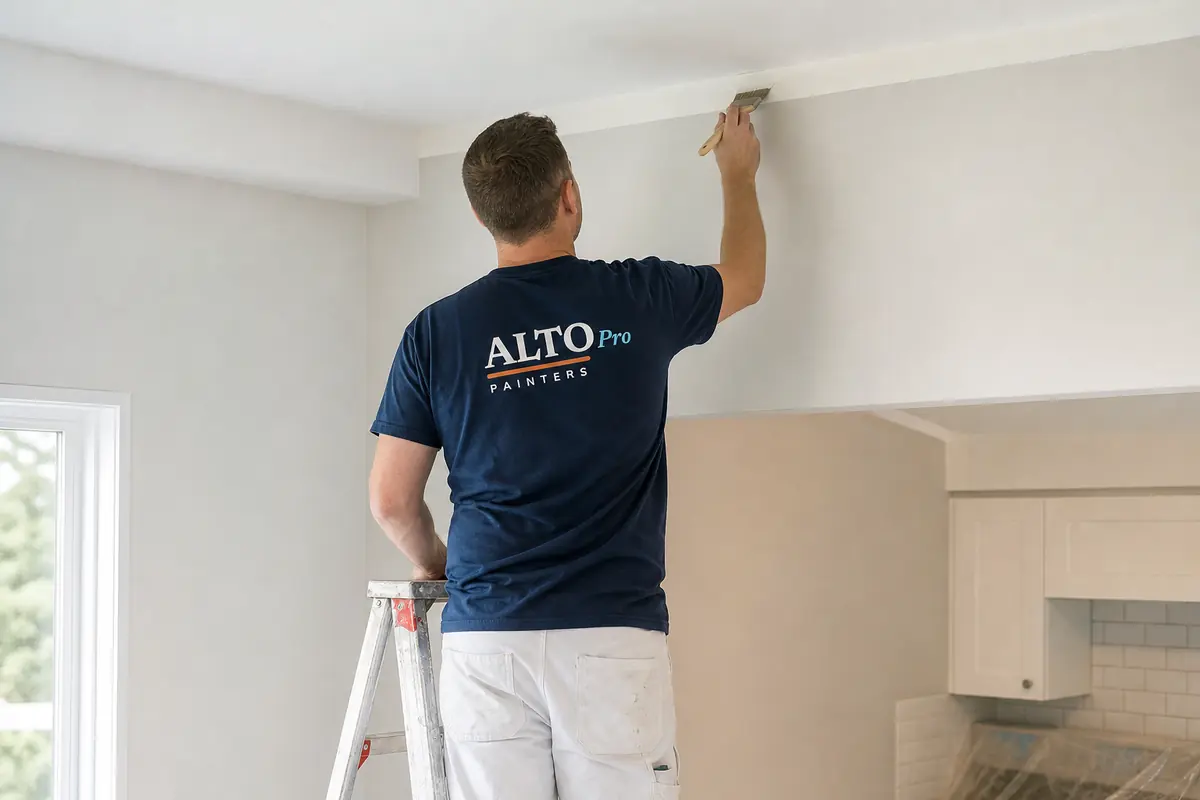
How a door should be prepped
Prep decides how the finished door looks and how long it lasts. Skipping steps is the reason most doors peel within a season or two. The work goes in a sensible order.
- Take off the hardware if possible: knobs, handles, strike plates and hinges. Masking around them rarely gives a clean edge.
- Clean the door with a degreaser, since hands leave oils that stop paint from bonding.
- Fill dents and gouges, let the filler dry, then sand it flush.
- Sand the whole surface lightly to dull the old finish, then wipe off the dust.
- Spot-prime bare wood, patches and any stained areas.
- Caulk gaps between panels and trim where the door frame meets the wall, if it is needed.
Painting order and technique
A panelled door is painted in a set order so the strokes do not leave lap marks. Start with the recessed panels, then the horizontal rails, then the vertical stiles, finishing with the long edges. Work quickly and keep a wet edge, brushing out toward the previous section so the paint blends.
For a flat slab door, a small foam or fine-nap roller followed by light tipping with a brush gives a smooth surface. Thin coats are better than thick ones. A thick coat sags, runs on edges and takes far longer to cure. Two thin coats with proper drying between them beats one heavy coat every time.
Do not forget the top, bottom and side edges of a door. Moisture gets in through unpainted edges, and over time that makes the door swell and stick.
Hardware: replace, clean or reuse
New hardware can change a door as much as the paint can. A worn brass knob on a freshly painted door looks tired, and a plain handle in a matte black or brushed finish gives the entry a different feel. If you are keeping the old pieces, clean and polish them before they go back on.
Wait until the paint has dried to the touch and hardened a little before you reinstall anything. Putting a latch back on too early can mark the edge or glue the door shut.
Drying versus curing
Paint can feel dry within hours, but it takes days to harden fully. During that cure, a door can stick to its frame, mark easily or pick up fingerprints. Keep the door open for as long as you can after painting, and avoid slamming it. On a front door, plan to paint on a dry day with mild weather, because rain or cold slows drying and can leave a rough surface.
Exterior latex should generally not be applied when temperatures are below about 10 C, so check the product data sheet and the forecast before you start.
A fresh exterior adds more than a door
A painted door stands out more when the surfaces around it are also clean and in good shape. Peeling trim, faded siding or a worn fascia will pull attention away from even a sharp new door. If the house is due for more than the entry, our exterior painting service covers the siding, trim and everything that frames the door, with the prep written into the quote.
Even a small update helps. Pressure washing the porch, sanding and repainting the trim around the door, and adding a clean house number and light fixture lift the whole front without a complete repaint.
Frequently asked questions
How long should a painted door stay open before I close it?
As long as you can manage, ideally a day. Closing a door on tacky paint can stick it to the frame, so wait until it is fully dry to the touch and then close it gently.
Do I need to remove the door to paint it?
Not always. Taking the door off its hinges and laying it flat gives the smoothest result with fewer drips, but a door can be painted in place if the hardware is removed and the edges are masked and protected.
Can a stained wood front door be painted?
Yes, with proper sanding and a bonding primer. A stained door that is in good condition may be better left stained, so decide before you start.
Which finish suits a front door?
Semi-gloss or satin are both common choices because they resist moisture and clean easily. Go with the one that suits the look you want.
Related painting services
More painting guides
- Painting, Staining, Refinishing or Refacing Kitchen Cabinets
- What a Professional Repaint Does for a Home
- How Kelowna’s Climate Affects Your Paint Choices and Timing
Have a question first? Read the FAQ, learn about Alto Pro Painters or contact us.
Further reading: Doors on Wikipedia and Curb appeal on Wikipedia.
Watch: how the work is done
How to paint a room fast, like a pro, by SgtDonovan on YouTube.