Before you pick up the phone
Most people want to know three things before they hire a painter: what will actually happen, who will be in the house, and when they will see the result. This page walks through the whole job in the order it unfolds, so nothing on the day comes as a surprise.
The short version is that you ask for a quote, we put the job in writing, we call you before we start, we prepare the surfaces properly, we paint, and then we go through the finished work with you before we pack up. The rest of this page fills in the detail.
Step one: ask for a free written quote
You can start in whichever way suits you. The online form takes a couple of minutes, and you can add photos of the rooms or the outside of the building so we can see what we are dealing with. If you would rather speak to someone, call (778) 760-0346 and describe the job out loud.
Either way, tell us what you want painted and anything that worries you about it. Mention the age of the home if you know it, whether there is wallpaper, stains, cracks or textured ceilings, and whether the property is part of a strata. Those details change the plan, and the more we know early, the more accurate the quote will be.
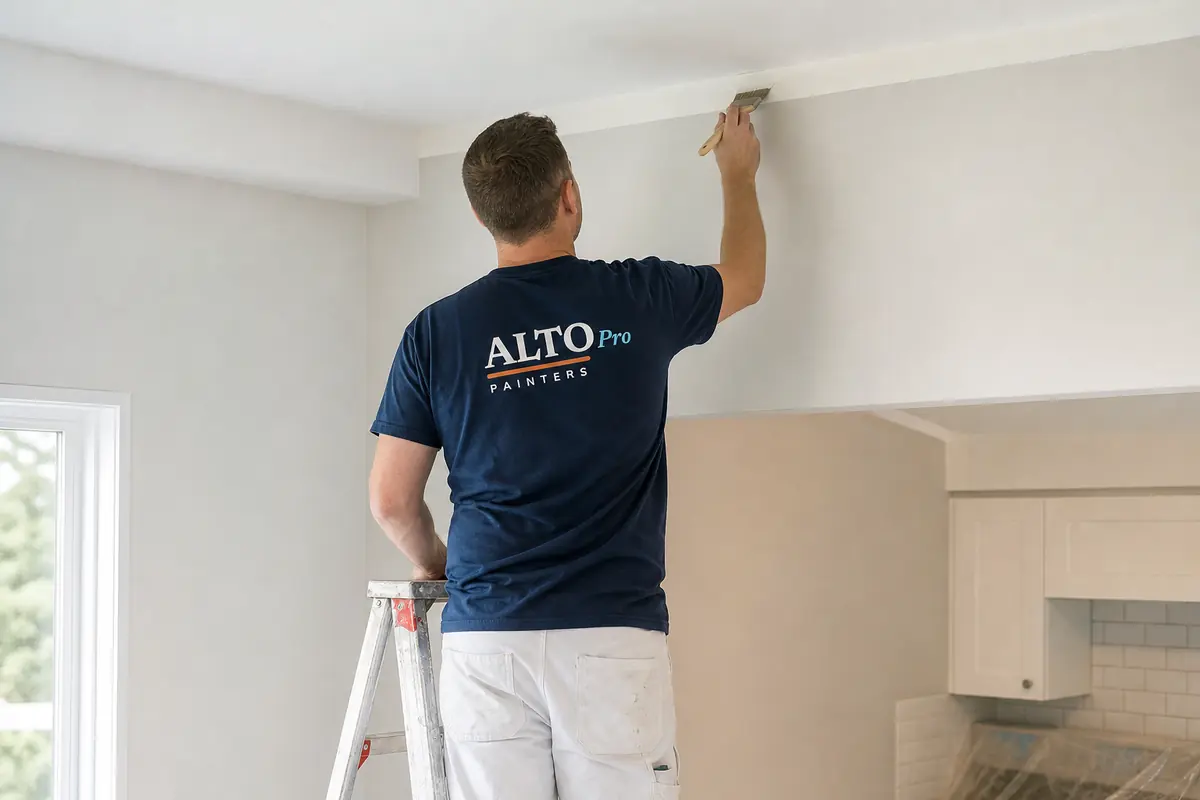
What the written quote tells you
The quote is free and it is in writing, which matters because a verbal conversation is easy to misremember on both sides. It is meant to be read slowly, at your kitchen table, and compared against anything else you are considering. A good quote answers the questions you would otherwise have to ask later.
- The surfaces to be painted, listed room by room or area by area, so you can see exactly what is in and what is out.
- The preparation planned for each surface, such as filling, drywall repair, wallpaper removal, caulking and priming.
- The paint, including the type of product and the finish for walls, ceilings, trim and doors.
- The timeline, so you know how the work is expected to be laid out.
Step two: the pre-job call
Before the crew shows up, we phone you. This call is where the quote turns into a plan for your particular home or workplace. We confirm the colours, talk through the finer details, and agree on what needs to be cleared out of the way.
Colour is the part people often want to settle in advance, and it helps to have your choices ready. If you are unsure, say so. It is far easier to talk through a finish or a shade now than to decide in a hurry with a roller already loaded.
- Colours for each wall, ceiling, trim and door, and the finish you want on each.
- Any detail you want handled in a particular way, such as a feature wall or a spot we should leave alone.
- What to clear before we arrive: small items, wall hangings, fragile pieces and anything in the way of the walls.
- How we get in, where we can work and how you would like the day to run.
Step three: paint day begins with a walk
We do not open a can on arrival. The first job is to walk the rooms or the building with you or with the notes from your quote, looking at each surface again. Surfaces sometimes look different up close than they did in a photo, and this is when we confirm that the plan still fits what is actually there.
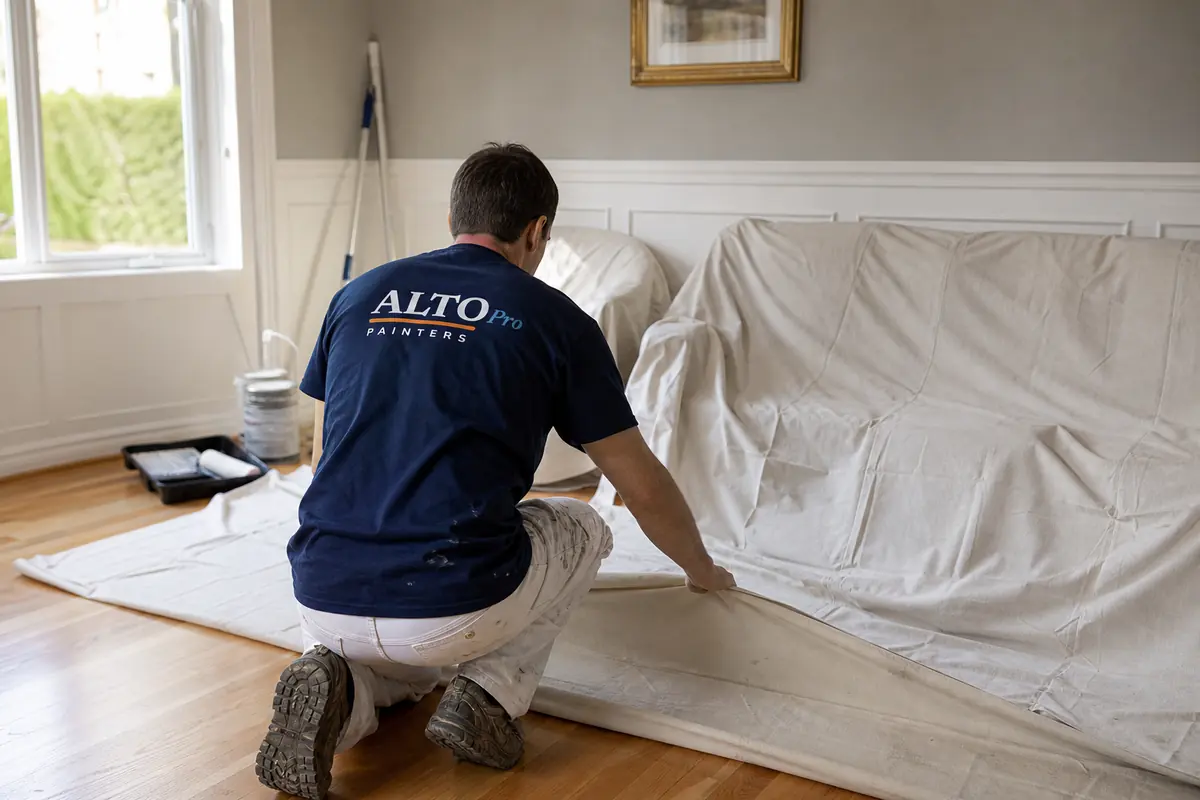
Then we protect the space. Floors get covered, and furniture is moved to the middle of the room or covered where it stays. Doing this properly takes time, but it is the reason a freshly painted room can be lived in again the same day without paint where it should not be.
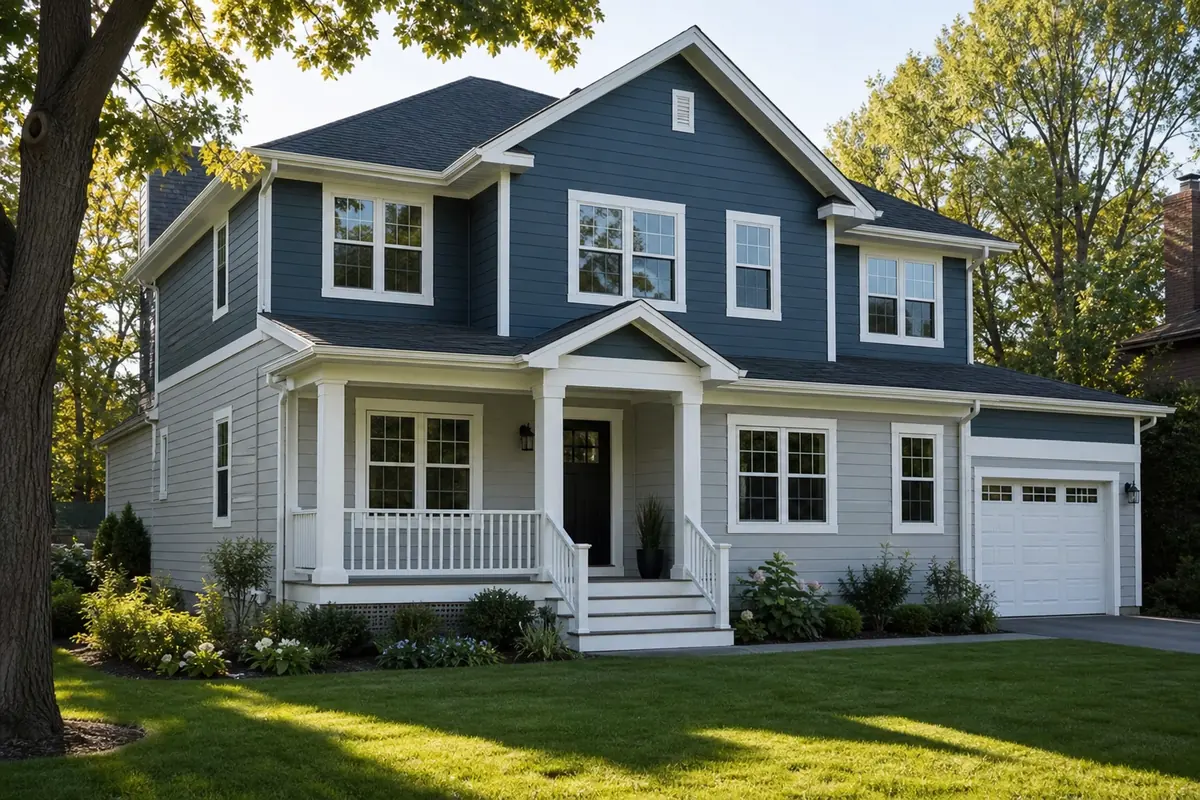
Repairs and preparation
This is the stage that decides how the finish looks and how long it lasts, and it is usually the biggest share of the work. Paint shows every flaw underneath it, and a gloss or satin finish shows more than a flat one.
Depending on what your quote lists, the preparation covers some or all of the following.
- Filling nail holes, dents and cracks, then sanding them flush so they disappear under the paint.
- Repairing drywall where there is damage, so the surface is sound before anything is applied.
- Removing wallpaper if it is part of the job, and dealing with the surface left behind.
- Caulking trim and windows, so gaps are closed and the lines between surfaces look crisp.
- Cleaning and scuffing surfaces where needed so the new coat can grip.
A note on older homes
If the home is old, there is one more thing to plan before any sanding or scraping. Health Canada considers lead paint probable in homes built before 1960 and possible in those built between 1960 and 1990, so we ask the age of the home and arrange testing before disturbing the surface. Textured ceilings in older homes can also contain asbestos, and those get tested before anything is scraped.
This is one reason we ask about the home at the quote stage. A test planned in advance is a small step. One discovered halfway through the job is a delay for everybody.
Priming, then painting
Once the surfaces are repaired and clean, stains and patched areas get primed. Primer seals what is underneath so that a water mark, a patch or a stubborn stain does not bleed through the finish coats. It also helps the new paint look even across repaired and unrepaired areas.
After that, the paint goes on in the colours and finishes you confirmed on the pre-job call. Ceilings and walls are done with care for the edges, and trim and doors get their own finish. If you chose a harder-wearing finish for a kitchen or bathroom, that is applied here too.
Step four: the final walkthrough
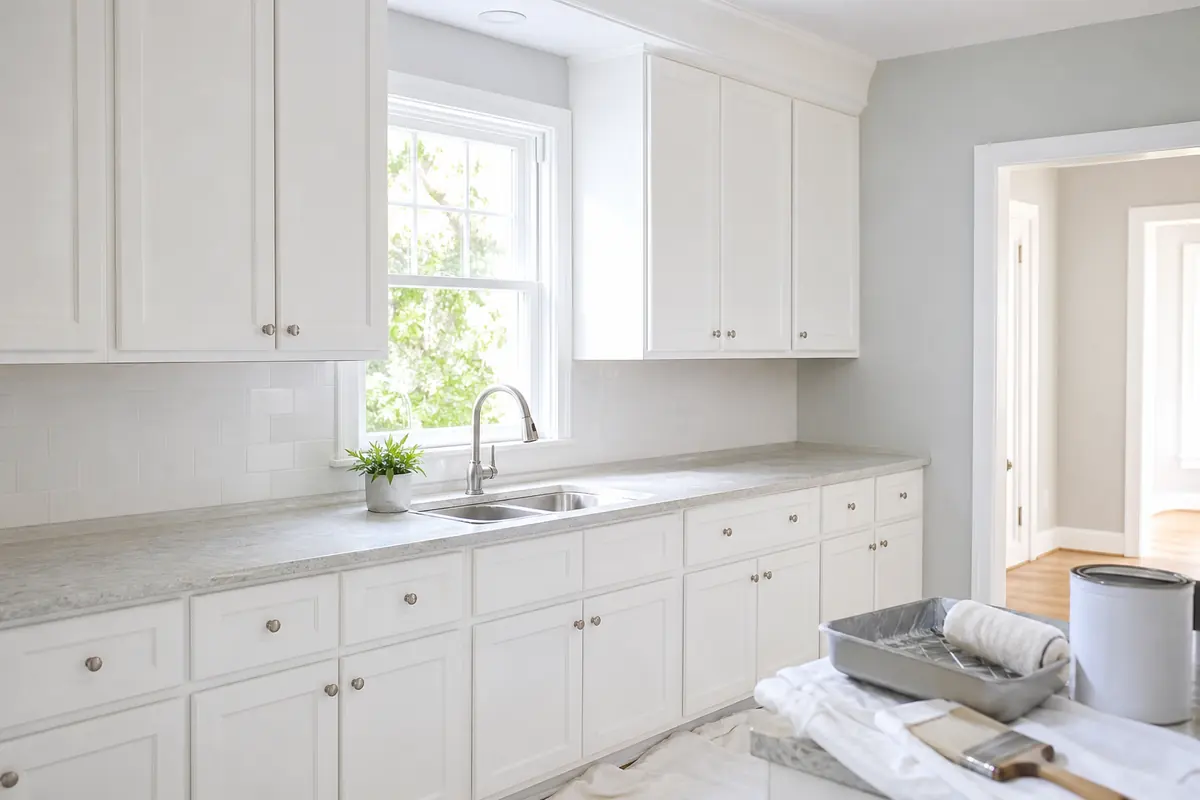
When the painting is done, we go through the work with you while the paint is still fresh. This timing is deliberate. Standing in the room with you, we can look along each wall in good light, check the edges and corners, and spot anything that needs another pass before you have to chase us for it.
If you notice something, say so right then. We note every spot and handle the touch-ups straight away, rather than leaving a list for later. Walking it together also means you hear what the surfaces need in the first days, such as how long to wait before cleaning or hanging things.
Step five: touch-ups and clean-up after sign-off
Touch-ups are finished before you sign off. Only once you are satisfied do we clear away our materials, remove the floor coverings, put furniture back where it belongs and leave the space tidy.
We treat sign-off as the point where the job is actually finished, not the point where the last brush is washed. Your home or workplace should look like it did before we arrived, apart from the new paint.
Who is in your home
Alto Pro Painters is licensed, insured and WCB-covered. That means the people working in your space are covered while they do it, and you can ask for proof when you request your quote if a strata council, property manager or insurer needs it.
Strata, rentals and commercial space
The steps are the same for a condo, a rental or a shop as they are for a house, but a few extra questions come up early. In a strata, changes to common property normally need approval, and bylaws often set work hours and noise limits, so check those before we pick a date. For offices and shops that need to stay open, we plan the order of work around how you use the space.
Ready to begin
The easiest first move is to request a free written quote and tell us about the job. If you are still deciding what to paint, the list of painting services shows what we cover, from interior and exterior work to cabinets, ceilings and wallpaper.
Frequently asked questions
How do I request a free written quote?
Fill in the online quote form, attach a few photos if you have them, or call (778) 760-0346. Tell us what you want painted, the age of the home if you know it, and anything unusual such as wallpaper, stains or textured ceilings.
What is included in the written quote?
The quote lists the surfaces to be painted, the preparation planned for each, the paint and finishes, and the timeline. Because it is in writing, you can read it, keep it and compare it with anything else you are considering.
What do I need to do before paint day?
We call you before the job to confirm colours, finish details and what needs to be cleared. In general, move small items, wall hangings and anything fragile out of the work area, and let us know how we get in and where we can work.
Do you protect my floors and furniture?
Yes. On paint day we walk the rooms first, then cover the floors and move or cover the furniture before any repair work or painting begins. Everything is put back once you have signed off.
When do the touch-ups happen?
We do a final walkthrough with you while the paint is still fresh. Anything you spot is noted and touched up before sign-off, and we clean up and clear our materials once you are satisfied with the work.
Explore more
Further reading: Health Canada: chemical safety for DIY projects and renovations and Primer on Wikipedia.