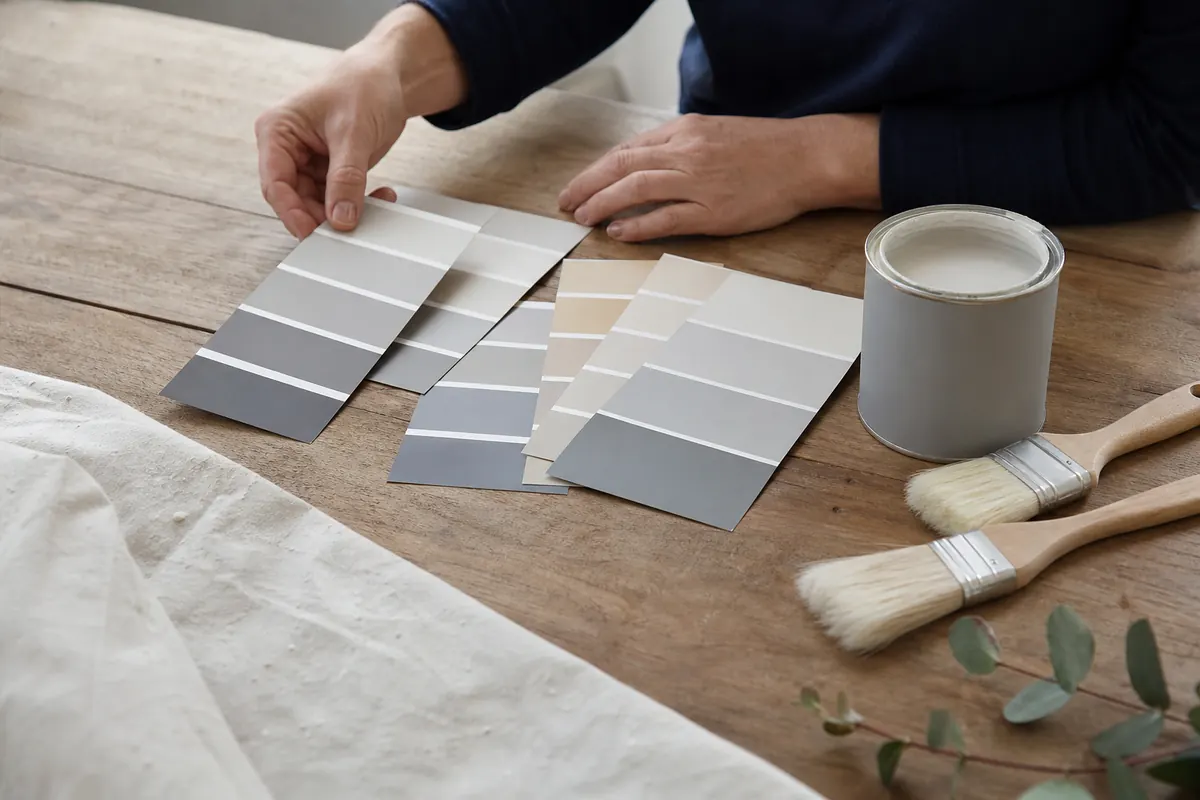
Start with the light, not the colour wheel
When the days shorten, a house changes. The sun sits lower, rooms get less daylight, and lamps come on earlier. A wall colour that felt fresh in July can look flat or washed out by November. Before you pick a shade for the darker months, spend a few days noticing when each room is bright and when it gets gloomy.
That observation is more useful than any list of popular colours. A room that stays dim from mid-afternoon on will need a different approach than one that gets low, golden light through a big south window. Colour is only half of the answer. The other half is what the light is doing to it.
Three questions to ask before you choose
Most colour decisions get easier when you answer these first.
- When do you actually use this room? A kitchen used at breakfast and dinner is mostly seen in electric light for several months of the year. A guest room barely seen at all can take bolder choices.
- Which direction do the windows face? Rooms facing north get cooler, bluer light, so walls tend to look cooler too. Rooms facing south and west get warmer light for longer.
- What is already in the room? Wood floors, kitchen cabinets, a big sofa or a stone fireplace carry their own colours. Your wall has to sit comfortably beside them.
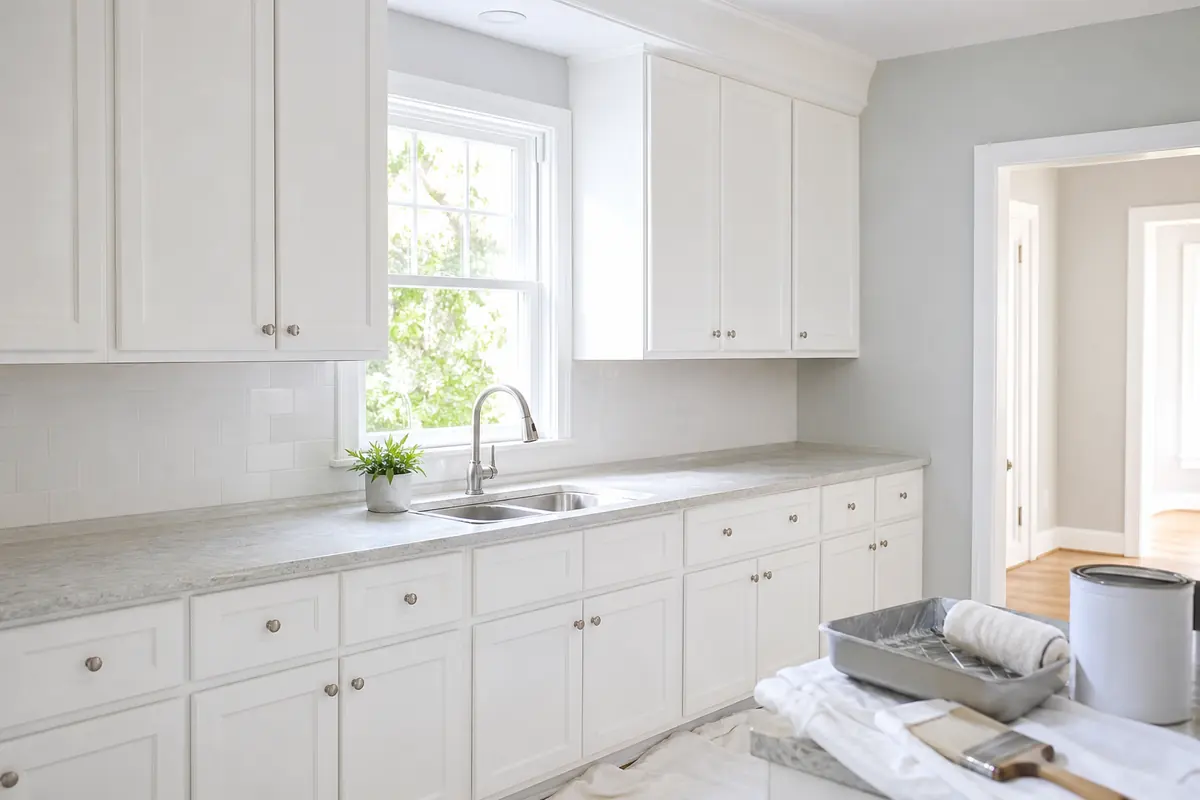
Colour families that hold their own when it is grey outside
Colours borrowed from the season outside tend to feel natural indoors. Think of the shades you see in turning leaves, woodsmoke, wet bark and stored squash. They do not need to be loud. Even a muted version of these tones carries warmth.
- Golden yellows and ambers: a golden yellow with a touch of orange adds sunlight to a dim room. It is a strong choice, so many people try it on a single wall, a hallway or a piece of furniture before committing to a whole room.
- Olive and moss greens: a green with some brown in it is calming and goes well with dark wood and leather. Lighter versions feel welcoming and relaxed. Deeper ones feel steady and settled.
- Deep blues: dark navy surprises people because it is a cool colour that still makes a room feel cozy. It suits spaces with warm lighting and works well alongside gray, silver and white.
- Warm neutrals: cream, oatmeal, soft taupe and greige give a pale, comfortable background if you do not want strong colour. They keep a room feeling gentle without going stark.
- Terracotta and rust: earthy reds and oranges bring warmth to rooms with lots of wood and natural fabrics, and they can look rich in lamp light.
Why dark and saturated shades behave differently in winter
Dark colours absorb light, which means a room painted in deep navy or forest green will feel more enclosed in short days. That can be exactly what you want in a den, a media room or a bedroom, where the goal is to feel wrapped up. In a small, windowless hallway, it can feel heavy.
A useful rule is to match the depth of the colour to the amount of natural light and to the purpose of the room. Rooms for evening use can handle depth. Rooms you rely on for brightness, like a home office with one small window, usually do better with lighter, warmer tones that reflect what light there is.
Test it the way the season will show it
A sample tested in sunny weather will mislead you. Put your test patch up on the wall and look at it on an overcast afternoon, in the evening under your normal lamps and again the next morning. Large sample boards, roughly the size of a sheet of poster board, give a truer picture than small chips.
Also check the colour next to your trim, your flooring and your curtains. A shade that looks calm on its own can become jarring when it sits next to a yellow-toned floor. Try putting the sample on two different walls, since the same colour can change from one wall to the next based on where the light falls.

Timing a painting project for the cooler months
Interior painting is well suited to the colder part of the year, because it does not depend on outdoor weather. The things to remember are ventilation and drying. Closed windows slow down drying and can hold paint smells in the house, so plan to ventilate on days when the weather allows it, and follow the drying times on the product label.
Exterior work is different. Exterior latex paint generally should not be applied when temperatures drop below about 10 C, and the temperature of the wall matters as well as the air, so check the product data sheet. If exterior painting is on your list, the cooler season is usually the time to plan and book it for the next suitable window, not to rush it.
Making the change without a huge project
You do not have to repaint a whole house to get a seasonal lift. One accent wall, a front door, a mantel, or a worn dresser given a new coat can change how a room feels. If you want to try a bold colour, these small trials cost little effort and show you how it behaves in your light.
When you do decide to paint a full room, a clear scope helps. We walk through colours and sheen before the job starts and write the surfaces, prep and paint into the free written quote. For rooms in the house you use most, our residential painting work follows that same process, so the plan is settled before paint day.
Frequently asked questions
Should I choose a lighter colour for winter?
Not necessarily. Lighter, warmer tones help dim rooms feel brighter, but many people prefer deeper colours for rooms they use in the evening. Choose based on the room’s light and purpose.
Can I test a bold colour without painting the whole wall?
Yes. Paint a large sample board or a small section and view it in morning, afternoon and lamp light. Trying a colour on a single accent wall or a piece of furniture is another low-risk option.
Is it a bad idea to paint indoors when it is cold?
No. Interior painting works well in cold months as long as the house is heated to a comfortable temperature and there is some ventilation so the paint can dry.
Will a dark colour make my room look smaller?
It can make walls feel closer, particularly in rooms with little daylight. In bedrooms and dens that effect is often welcome, but in a tight hallway a lighter shade is usually more comfortable.

Related painting services
More painting guides
- Declutter First, Then Refresh Your Home With Paint
- Door Painting Ideas: Front Doors, Interior Doors and Curb Appeal
- Painting, Staining, Refinishing or Refacing Kitchen Cabinets
Have a question first? Read the FAQ, learn about Alto Pro Painters or contact us.
Further reading: Colour theory on Wikipedia and Environment Canada weather.