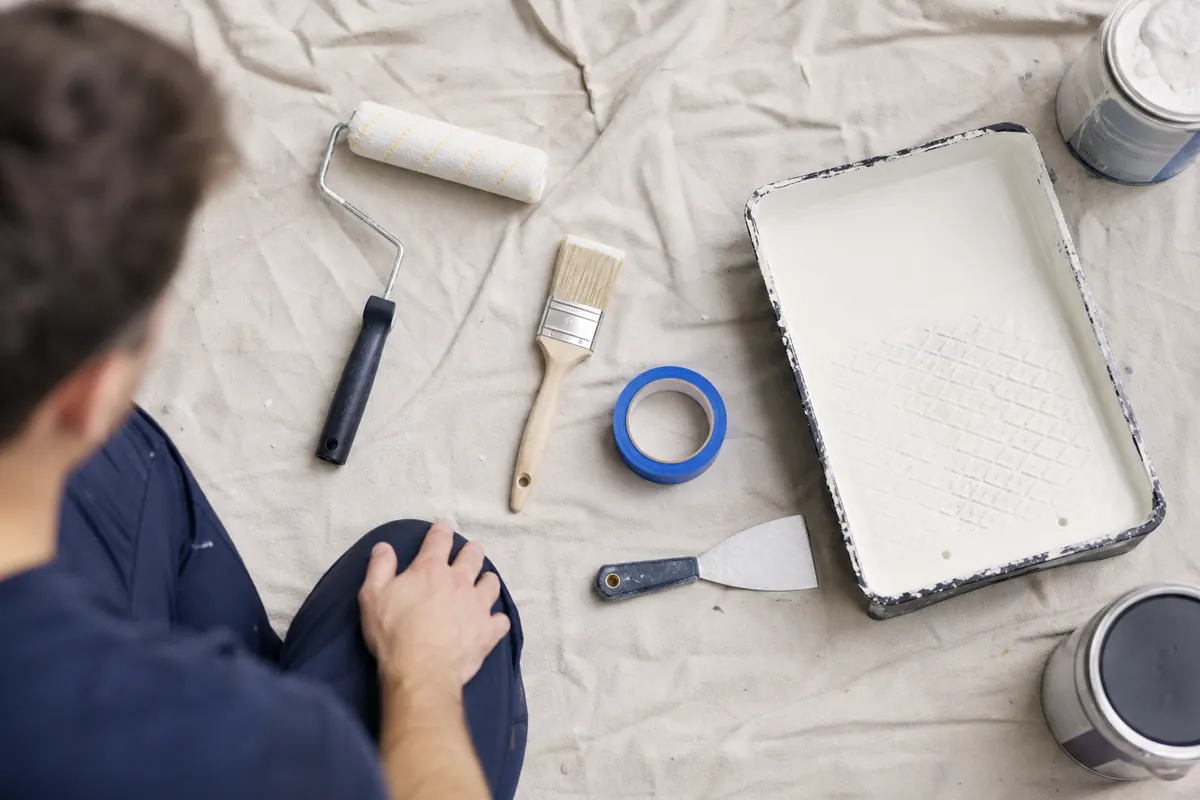
Test before you scrape: the asbestos caution
Start here, before buying a scraper or a roll of plastic. Textured, or popcorn, ceilings in older homes can contain asbestos. You cannot tell by looking at it. If the ceiling might be old enough to be a concern, the material has to be tested by an accredited lab before anyone scrapes, sands or disturbs it.
Disturbing asbestos-containing material releases fibres into the air, and those are a serious health hazard when breathed in. This is why the first question we ask on a popcorn ceiling job is the age of the home. If the answer puts it in the range where asbestos is a possibility, we plan for testing first and do not start until the result is back. If a test is positive, the work stops being a casual weekend project and becomes a job for people who handle hazardous material properly. Do not dry scrape a ceiling of unknown content.
Why people remove popcorn ceilings
The texture was popular because it hid imperfect drywall work and absorbed sound. Today most people want it gone for the same reasons: it collects dust and cobwebs, it casts small shadows that make a room look dated, and it is hard to repaint neatly. Smooth ceilings reflect light more evenly and make a room feel cleaner.
There is also a practical reason. If the texture has been painted over several times, or has water stains, it is often easier to start fresh than to keep patching.
Painted or unpainted texture
Whether the ceiling has ever been painted changes the method. Unpainted texture is soft and absorbs water, so it can be misted and scraped off in sheets. Painted texture has been sealed by the paint, so water does not soak in and the material is much harder to remove. It may need repeated wetting, more scraping effort, or in some cases a different approach such as skim coating over the texture or replacing the drywall.
Do a small test patch, but only after the asbestos question is settled. Spray a small area with water and wait a few minutes. If it softens, the texture is likely unpainted. If the water beads or sits on top, it has been sealed.
The removal process, step by step
For a ceiling cleared as safe to work on, the standard sequence looks like this.
- Empty the room as much as possible. Anything that stays gets covered in heavy plastic and taped.
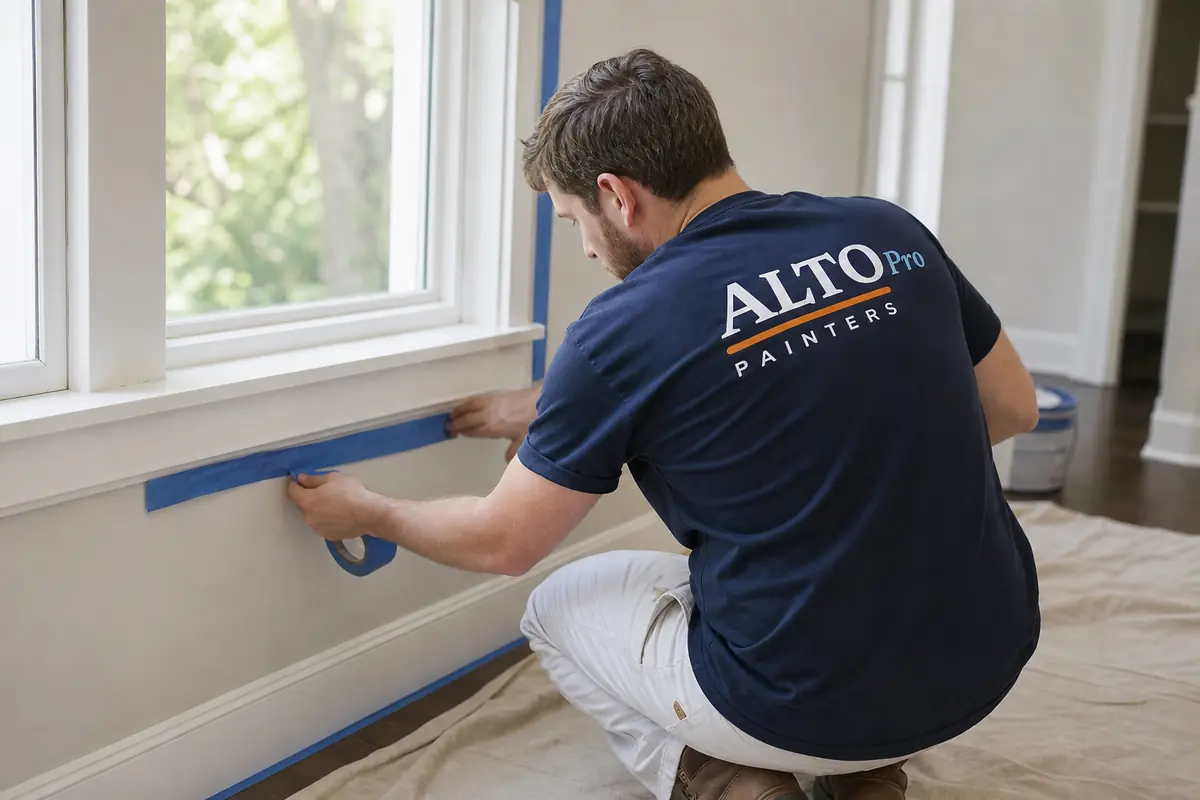
- Cover the floor and walls with plastic. Turn off power to ceiling fixtures and fans and remove or cover them.
- Mist the ceiling lightly with water in small sections. Soak it too much and the drywall paper can go soft and tear.
- Let the water soak in for the time the material needs, then scrape with a wide putty knife or ceiling scraper, working with light, even pressure.
- Collect the debris from the plastic as you go. It is wet, heavy and messy, and it is far easier to deal with before it dries.
- Let the ceiling dry completely before touching it again.
Fixing the surface underneath
Removing the texture is only half the job. What is under it is usually rougher than people expect: gouges from the scraper, exposed seams, tape lines, nail pops and old patches. These all have to be fixed or the new ceiling will look worse than the textured one did.
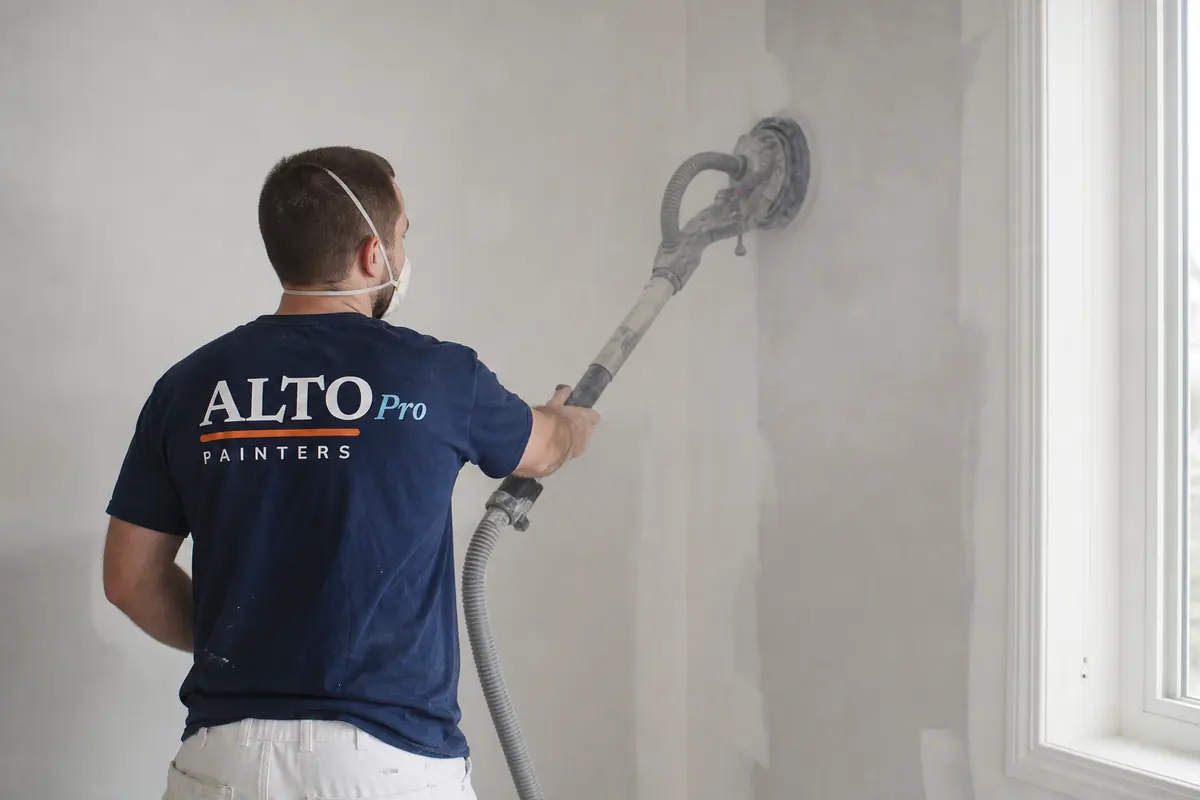
The normal fix is a skim coat or several thin coats of joint compound, sanded smooth between coats. Dust from sanding is extreme and goes everywhere, which is why masking and plastic are not optional. After sanding, the ceiling is wiped down, spot primed, and then primed completely so the compound and the drywall paper absorb the topcoat at the same rate. Skipping the primer leaves blotchy patches you can see in morning light.

Painting the finished ceiling
A flat ceiling paint is the usual choice because it hides small imperfections. Apply it in even strokes, working towards the light so the marks stay minimal. Two coats are standard. Cutting in the edges first, then rolling, helps avoid a visible frame at the walls.
If the room is being repainted at the same time, do the ceiling first so any spatter ends up on walls that are about to be done anyway.
Is it a DIY job?
Technically, yes, a competent homeowner can do it. In practice it is slow, wet, dusty work done above your head, and the finish depends heavily on the skim coat and sanding stage. Many first-time attempts end with a ceiling that is smoother than before but wavy, patchy or stained.
The bigger issue is safety. The testing and handling question above is a real consideration, and a professional will not skip it. A contractor who does this work regularly can also set up containment, deal with debris, and finish the ceiling in a fraction of the time. If you are unsure if your ceiling is a safe candidate, start with the age of the house and a conversation. We can walk through the plan and put the scope in a free written quote. You can read more about popcorn ceiling removal if you want to see how we approach it.
Frequently asked questions
How do I know if my popcorn ceiling contains asbestos?
You cannot tell by looking. The only reliable way is to have a sample tested by an accredited lab before any scraping or sanding.
Can I just paint over a popcorn ceiling instead?
Yes, and it is a legitimate option. Painting leaves the texture in place and avoids disturbing the material, though it makes later removal harder.
Why does the ceiling need priming after the texture is gone?
Joint compound and drywall paper soak up paint differently. Primer evens that out so the topcoat dries with a consistent finish.
Related painting services
More painting guides
- Interior Painting Tips From the Job Site
- A Guide to Eco-Friendly Paint Options
- Why Commercial Painting Matters for a Business
Have a question first? Read the FAQ, learn about Alto Pro Painters or contact us.
Further reading: Popcorn ceilings on Wikipedia and Health Canada: asbestos and your health.
Watch: how the work is done
How to remove a popcorn ceiling, by Lowe's Home Improvement on YouTube.