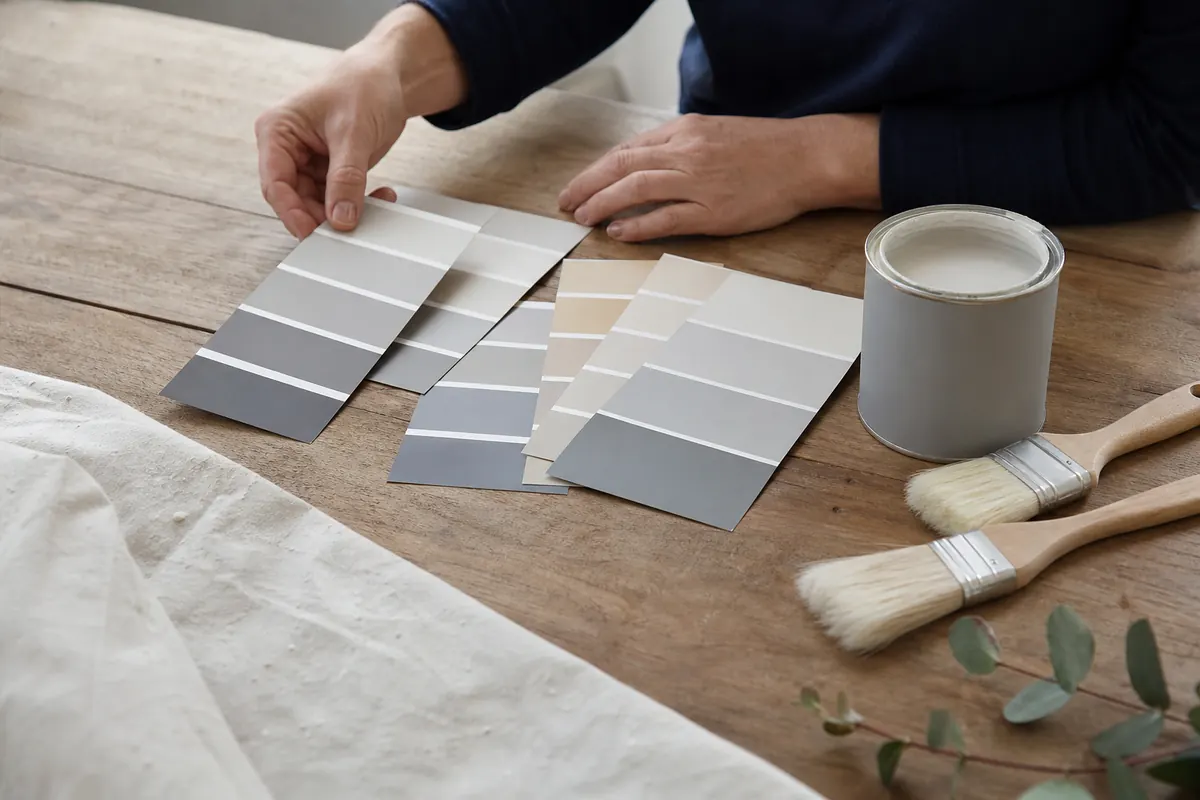
Why the finish matters as much as the colour
Most people spend weeks on colour and about thirty seconds on sheen. That is backwards. Sheen is the amount of light a dried paint film reflects, and it decides how the wall looks at different times of day, how well it stands up to scrubbing, and how obvious every dent and roller mark will be.
Two cans of the exact same colour can look like different shades on the wall if one is flat and the other is semi-gloss. The glossier one bounces light back at you, so the colour reads brighter and sometimes cooler. The flatter one soaks light up and looks deeper and softer. If you have ever brought home a sample and felt it looked wrong once it was dry, sheen is often the reason.
The main sheens, from least to most shine
Manufacturers use slightly different names, but the range is roughly the same everywhere. Here is how each one behaves once it is on the wall.
- Flat or matte: no shine at all. It hides patched spots, uneven drywall and old texture better than anything else. The trade-off is that it marks easily and does not like being scrubbed, so it suits low-traffic spaces.
- Eggshell: a soft, barely-there glow. It still hides most flaws, and it handles a damp cloth far better than flat. This is a common choice for living rooms, bedrooms and hallways.
- Satin: a smooth, velvety shine with more durability. It wipes clean well, which makes it popular for family rooms, kids’ bedrooms and busy halls.
- Semi-gloss: a clear, noticeable shine. It is tough and washable, so it is the usual pick for trim, doors, window casings, kitchens and bathrooms.
- Gloss: the most reflective and the most durable, but it shows every flaw underneath. It is used sparingly, often on doors, railings or furniture-style finishes.
Matching the finish to the room
Start with how the room is used, not with what looks fashionable. A formal dining room that gets a dinner party twice a year can take a flatter finish. A back hallway where boots, backpacks and wet dogs brush the wall every day needs something you can wipe.
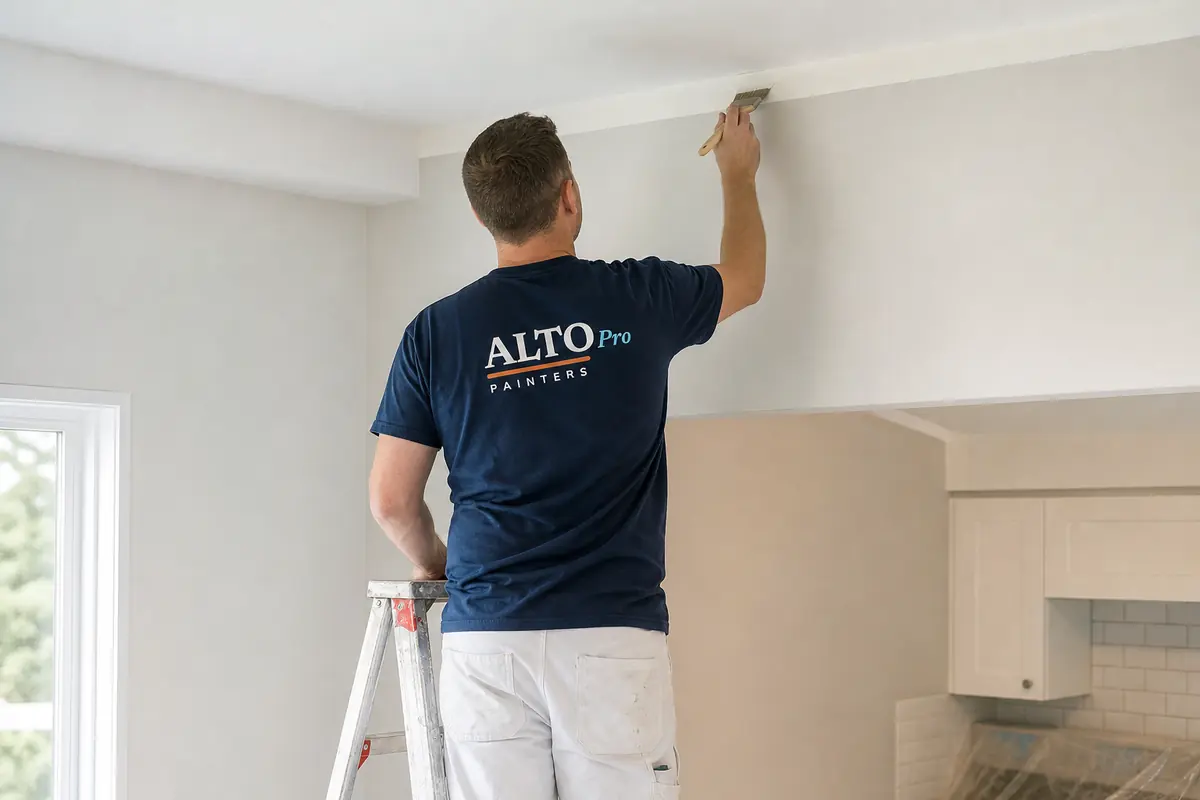
Ceilings are almost always flat. A flat ceiling hides roller marks and the small imperfections that show up when light rakes across it from a window. Bedrooms usually do well with flat or eggshell, because the goal there is a calm, soft look. Kitchens and bathrooms take more punishment from steam, grease and splashes, so satin or semi-gloss earns its place. Trim and doors are touched constantly and get banged by vacuums and furniture, so a harder, glossier finish keeps them looking sharp.
Walls with flaws need a flatter sheen
Here is the part that catches people out. The shinier the paint, the more it shows. If your walls have patched nail holes, old drywall seams, or a surface that was never sanded smooth, a satin finish will highlight every one of them, especially near a window or under a lamp.
A good painter fixes those problems first. We fill holes and cracks, sand the patches, and prime them so the sheen is even across the repair. Even so, if a wall is rough or heavily textured, dropping down a step in sheen is the sensible way to keep the result forgiving. You can often get the washability you want from a good-quality eggshell rather than forcing satin onto a wall that cannot carry it.
Durability is about more than sheen
A higher sheen generally means a harder, more scrubbable film, but it is not the only factor. The quality of the paint, the primer underneath, how many coats go on, and how long you let it cure all matter. Some modern flat paints are marketed as washable and they do clean better than the old chalky flats, but they are still not a match for a semi-gloss in a steamy bathroom.
Cure time is worth knowing about. Paint can feel dry within hours, but the film keeps hardening for days. Scrubbing a fresh wall too soon is a common way to burnish it and leave shiny patches on a flat finish. Give new paint a couple of weeks before you start wiping marks.

Mixing sheens in one room
Using more than one sheen in a room is normal, and it is how most professionally finished homes are done. Walls in eggshell or satin, trim and doors in semi-gloss, and the ceiling in flat. The contrast gives trim a crisp edge without any need to change the colour.
One thing to watch is consistency across a single wall. Avoid painting part of a wall in one sheen and another section in a different one, since the join will be visible in raking light. If you are touching up an older wall, match the original sheen as closely as you can, and be aware that touch-ups on old paint can still show because the existing film has aged.
A quick way to decide
If you are stuck, ask three questions. How much traffic does this surface get? How smooth is the wall underneath? And how much natural light hits it? High traffic points to a harder sheen. A rough wall points to a flatter one. Strong light, especially from large windows, makes any sheen look more pronounced, so lean softer in bright rooms.
Bring a sample home and look at it on the actual wall, in the morning and in the evening. Small chips under store lighting tell you very little. If you want a second opinion, we walk through finishes at the time of your quote and write the recommendation into the scope, so you know exactly what is going on each surface before work begins.
Frequently asked questions
What finish suits a bathroom?
Satin or semi-gloss is the usual choice because both handle steam and splashes and can be wiped down. Make sure the room has a working fan, since moisture is what shortens the life of any paint.
Can I use a glossy paint to make cleaning easier on a rough wall?
It will clean easily but it will also highlight every flaw. On a rough or heavily patched wall, a washable eggshell is usually the better trade.
Should the ceiling be the same sheen as the walls?
Usually not. Ceilings are normally flat so that roller marks and small imperfections do not catch the light.
Does the finish change how the colour looks?
Yes. Higher sheens reflect more light and can read brighter, while flat finishes look deeper and softer. Always test your sample in the finish you plan to use.
Related painting services
More painting guides
- Exterior Painting Preparation Guide
- How to Remove a Popcorn Ceiling
- Interior Painting Tips From the Job Site
Have a question first? Read the FAQ, learn about Alto Pro Painters or contact us.
Further reading: Gloss on Wikipedia and Paint on Wikipedia.
Watch: how the work is done
A simple guide to interior paint finishes, by This Old House on YouTube.