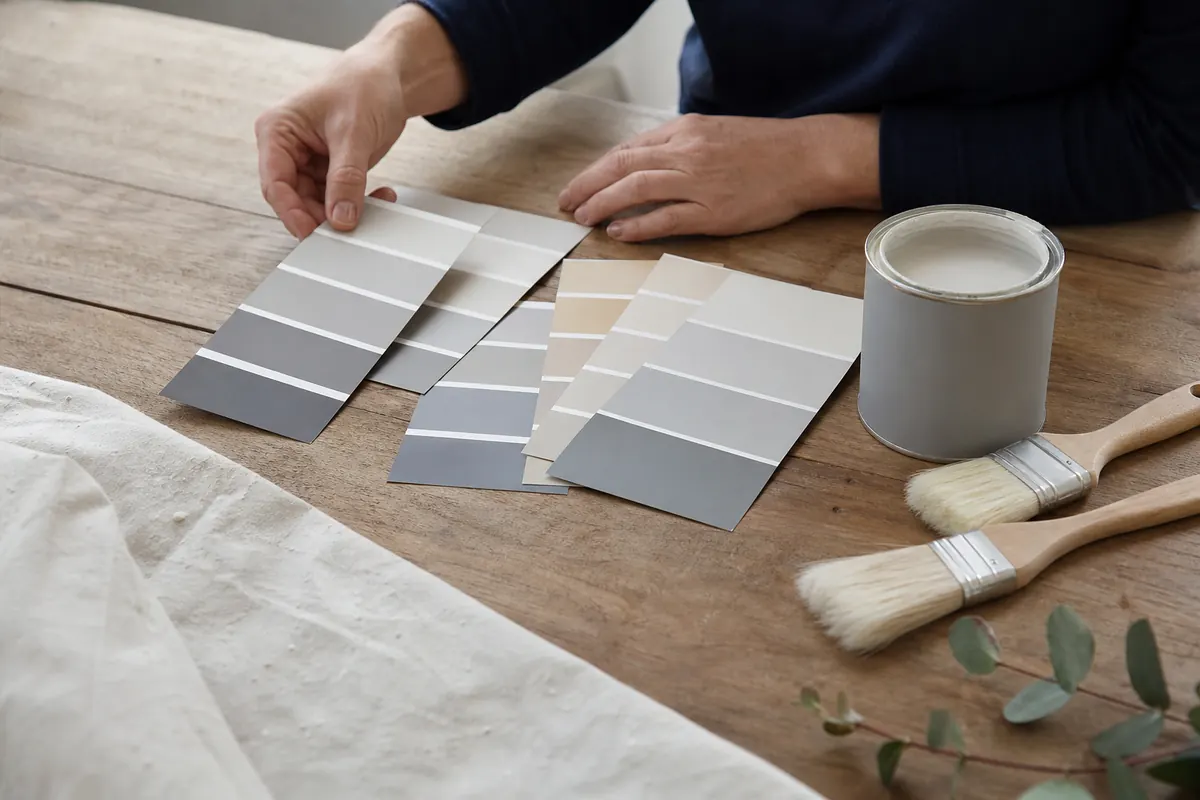
Both options are reasonable
Painting is one of the most accessible home projects there is, and plenty of people do it well themselves. Hiring a professional is not always the right call, and DIY is not always the thrifty one. The honest answer depends on the size of the job, the condition of the surfaces, your time, and how much the result matters to you.
This guide lays out what each path really involves so you can decide with eyes open.
Where DIY works well
A single bedroom with smooth walls, a ceiling in good shape and furniture you can move is a fair DIY project. So is a small touch-up, a feature wall, or a piece of furniture. If you enjoy the work, have a free weekend and are comfortable with a ladder, you will probably get a decent result and some satisfaction from it.
DIY also gives you flexibility. You can paint in short sessions, change your mind about a colour after a few days, and spread the work over a month if you want to.
What DIY really takes
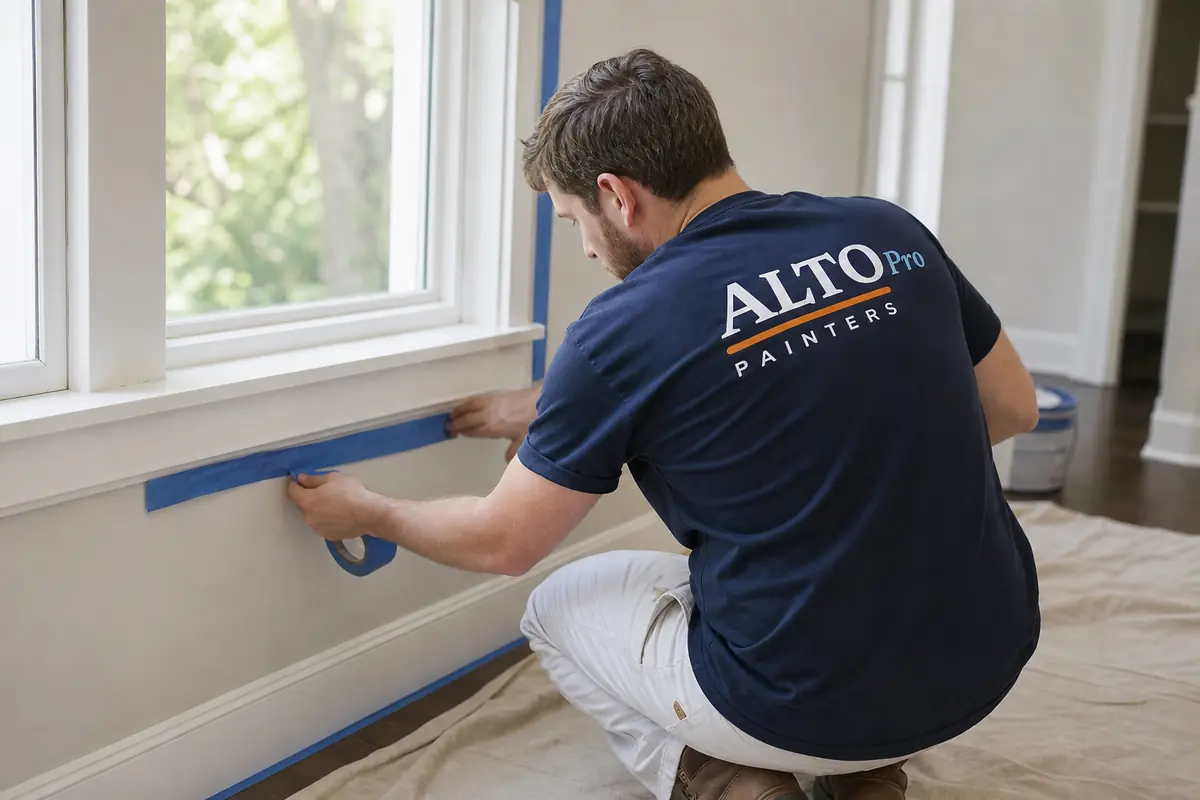
People tend to underestimate the time. Prep is the largest piece, and it is the part that gets skipped when people are tired. Moving furniture, covering floors, filling holes, sanding, washing, taping, priming, cutting in, two coats, clean-up, and returning everything to its place can easily eat a whole weekend for one room.
There is also a tool and materials cost. Good brushes, roller frames and covers, an extension pole, drop cloths, tape, filler, sandpaper, primer, ladders and a work light add up, and cheap versions usually show in the finish. If you are only painting one room, you may spend a surprising share of the project budget on gear you will rarely use again.
Where a professional earns their place
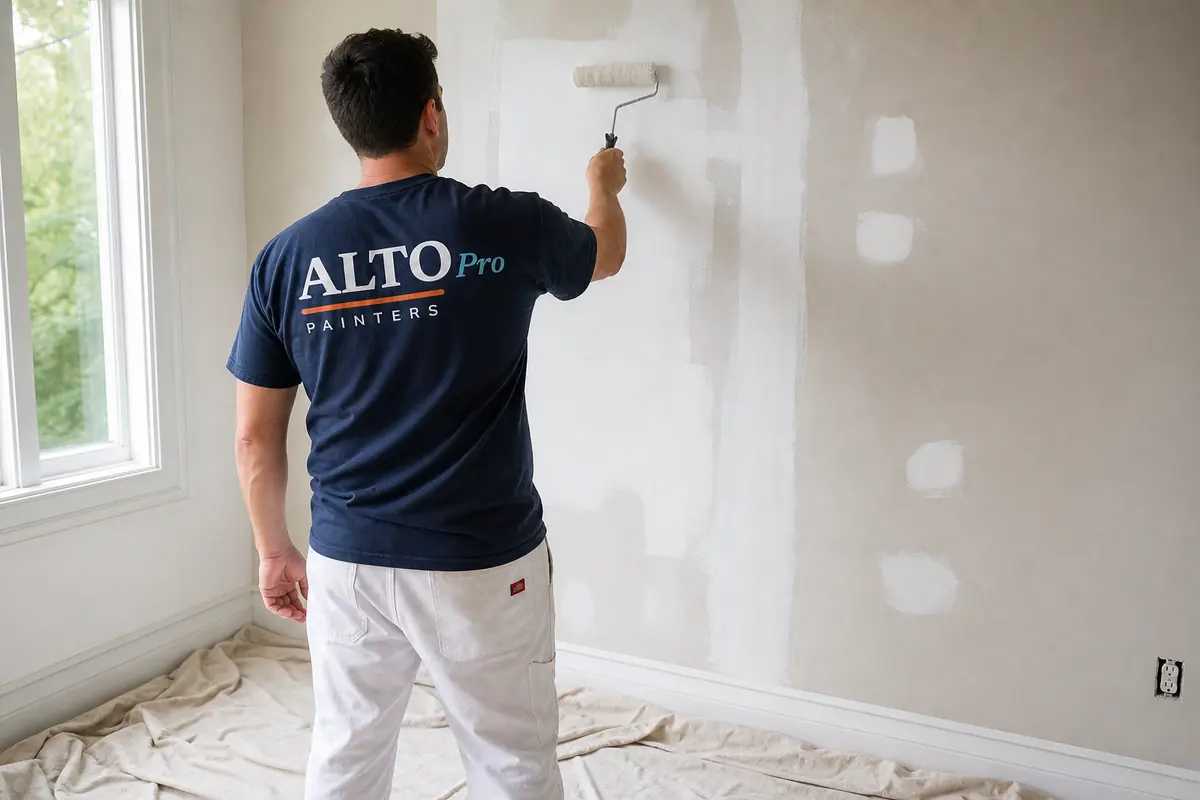
Professionals bring speed, equipment and habit. A trained crew will walk the rooms, cover floors, move and cover furniture, fill and sand holes and cracks, repair drywall, caulk trim and windows, prime patches, apply the paint and do a final walkthrough while the paint is fresh. They have done each of these steps hundreds of times, so edges are straighter, coverage is even and lap marks are rare.
Some jobs are simply better handled by someone with the right setup: high ceilings, stairwells, exterior work above one storey, cabinets, whole-house repaints, wallpaper removal and drywall repair. These need scaffolding or lifts, dust control or spray equipment that most homeowners do not own.
Safety and hidden hazards
Older homes bring risks that are easy to miss. Health Canada states that lead paint is probable in homes built before 1960 and possible in homes built from 1960 to 1990. Sanding or scraping lead paint without testing and proper precautions can spread dust through the home. Textured ceilings in older houses can contain asbestos and should be tested before anyone scrapes them.
Ladders are the other big one. Falls from ladders are among the most common home-improvement injuries. A professional crew works with the right ladders, planks and fall precautions, and for exteriors that is a major reason to hire out.
Comparing the real trade-offs
Rather than comparing price tags alone, compare what you are getting.
- Time: a crew can finish in days what may take you several weekends.
- Finish quality: sharp lines, consistent coverage and fewer touch-ups after sign-off.
- Prep: a written scope should list what will be repaired, sanded and primed.
- Materials: professionals can recommend products suited to each surface.
- Risk: if something goes wrong, you want to know who is responsible for fixing it.
- Your time: what is a free weekend worth to you?
Questions to ask before hiring
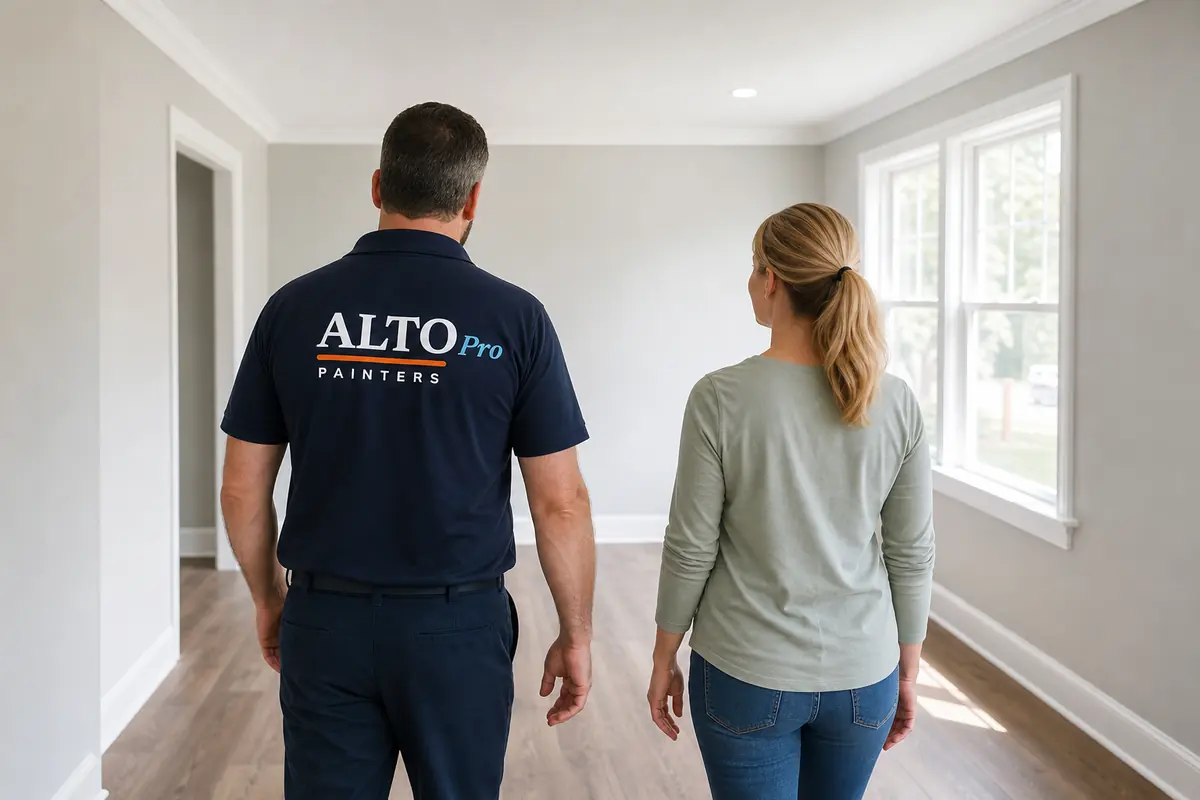
Ask for a written quote that lists the surfaces, the prep steps, the paint and the timeline. Ask who will be on site and who your point of contact is. Ask what you need to clear before the day, how clean-up is handled, and whether there is a final walkthrough before the job is signed off.
Be cautious of anyone who will not put the scope in writing, or whose quote is vague about prep. Cheap quotes that skip prep are the usual source of paint that peels two years later.
A middle path
You do not have to choose all or nothing. Many homeowners handle the prep themselves, such as clearing rooms and removing wall hangings, then hand the painting to a crew. Others do the walls and hire out the ceilings, stairs or exterior. Some paint the bedrooms and call a pro for the high-visibility spaces.
If you are weighing it up, request a free written quote and see how the scope compares with what you had in mind. Even if you decide to do it yourself, you will have a clear checklist. You can also read more about residential painting to see what a full job covers.
Frequently asked questions
Is DIY painting cheaper?
It can be for a single small room, but tools, materials and your own time add up. For larger or more difficult projects, the gap is often smaller than people expect.
What is the most common DIY mistake?
Skimping on prep. Unfilled holes, unwashed walls and missing primer show up in the finished surface.
Can I do some of the work and hire a painter for the rest?
Yes. Clearing rooms, removing hardware and doing minor prep are common ways to share the job. Agree the split in the written quote.
Related painting services
More painting guides
- What Affects the Cost of Painting
- Decorating Rooms in Gray: Ideas That Work
- Metallic Paint, Glazes and Feature Walls: What to Know
Have a question first? Read the FAQ, learn about Alto Pro Painters or contact us.
Further reading: Health Canada: lead-based paint and WorkSafeBC: lead hazards.