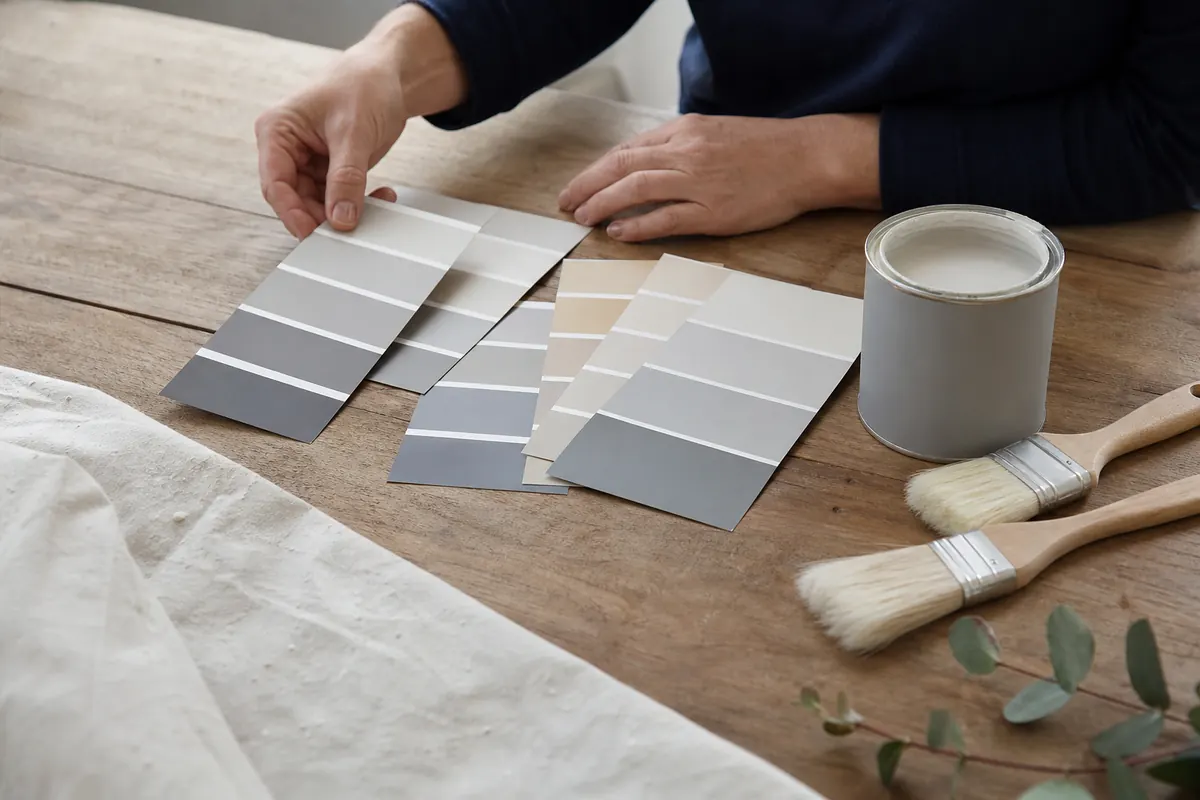
Gray is a family of colours, not one choice
People ask for gray as if it were a single paint. In practice it is a huge family, and two grays that look identical on a small chip can behave very differently once they cover a whole wall. The difference is almost always undertone. Some grays lean warm, with a hint of beige or brown. Some lean cool, with a trace of blue or green. A few lean purple, which surprises people when the light changes.
That is why gray has a reputation for going wrong. It is easy to pick one that looks soft and settled in the store, then watch it turn cold and a little gloomy in a north-facing room. Most of the ideas below come down to one habit: decide what mood you want first, then choose the gray that supports it.
Ten ways to use gray, grouped by the mood you want
Rather than a list of rooms, it helps to think in terms of feeling. Here are the combinations that tend to work well on real walls.
- Bright and modern: a light gray on the walls with white trim and ceiling. The pale tone bounces daylight around and makes a room feel a little larger.
- Depth without darkness: one dark gray wall behind a sofa or bed, with the other three walls in cream or soft white. The warm neighbours stop the dark wall from closing in.
- Polished and quiet: several warm grays used together, such as a lighter tone on the walls and a deeper one on a built-in or door. Staying in one temperature keeps it calm.
- Clean and minimal: a cool gray with plain furnishings, then a single wall in a strong colour for contrast. Pink, mustard or deep green all stand out against a cool gray.
- Cozy: a pale, warm gray paired with cream or oatmeal tones. It reads as soft and slightly rounded rather than stark.
- Traditional or mixed decor: gray with earth tones such as clay, moss and walnut. The gray acts as a backdrop so the wood and fabrics do the talking.
- Texture-led: gray walls beside brick, raw timber or concrete. Because the colour is quiet, the surfaces get the attention.
- Strong and moody: charcoal or slate gray in a den, office or media room, ideally with plenty of lamps. Dark colours suit rooms you use in the evening.
- A room with a feature: gray walls that frame a mirror, a clock collection or a gallery of pictures. The wall stays out of the way and lets the objects stand out.
- Restful: a very pale gray in the room where you want to unwind after work. Low contrast, low fuss.

How light changes the gray you chose
Light is the most common reason a gray looks different at home than it did on the sample. A room that faces north gets cooler, flatter daylight, and a cool gray in that room can look icy. A warm gray usually balances it. A south or west room gets stronger, warmer light for much of the day, and a cool gray can look crisp and clean there.
Artificial light matters just as much. Warm-toned bulbs pull gray toward beige. Cooler bulbs push it toward blue. Pick your bulbs before you judge your colour, and look at the sample in the morning, at midday and with the lamps on at night. If it only looks good for one of those, keep looking.
Choosing a gray without second-guessing it for months
A reliable way to narrow things down is to hold the sample against something white. A white door frame or a sheet of printer paper will show you the undertone straight away. If the gray looks greenish next to the white, it is a green-leaning gray. If it looks pinkish, you have found a purple lean.
Next, consider what is already in the room. Floors, countertops and large furniture often have a fixed undertone you cannot change. A gray that clashes with an orange-toned wood floor will keep bothering you. A gray that shares a bit of warmth with the floor tends to sit quietly beside it.
Dark gray is not a risk if the prep is right
Dark gray is one of the best ways to add depth, and it is also one of the least forgiving colours to apply. Deep colours show roller marks, patched holes and uneven drywall more than pale ones do, especially in a satin finish near a window.
This is where preparation earns its keep. Holes and cracks need to be filled and sanded flat, bare patches need primer so they do not drink the paint unevenly, and the edges need to be cut cleanly. A deep gray often needs an extra coat to look even. If a wall is already rough, a flatter finish will hide more, and we cover that trade-off in our guide to choosing a paint finish. Planning an interior job around a dark colour is a good time to ask for interior painting that includes full prep rather than a quick roll-over.

Small mistakes that make gray rooms feel flat
Gray on every surface with nothing to break it up is the usual culprit. If the walls, the sofa, the rug and the curtains are all the same tone, the room feels like a waiting area. Add warmth through wood, textiles or a colour you love in a small amount.
Another trap is forgetting the trim. Bright white trim against a soft gray sharpens the edges and makes the room look finished. Trim that is almost the same colour as the wall can look muddy. Finally, avoid matching every room in the house to the same gray without checking it in each space, because the light in the hallway is not the light in the living room.
Testing before you commit
Paint a sample board about the size of a poster and move it around the room. Put it near the window, in a corner and next to the furniture. Leave it up for a couple of days. Colour decisions made in ten minutes tend to be regretted, while colours that have survived two days of ordinary light usually hold up.
When you ask us for a free written quote, we can talk through colour, sheen and prep before the work is scheduled, and the details are written into the quote so there are no surprises on paint day.
Frequently asked questions
How do I tell if a gray is warm or cool?
Hold the sample against a plain white surface. Beige or brown hints mean a warm gray, while blue or green hints mean a cool one. A purple tint is a sign the gray leans violet.
Will a dark gray make a small room feel smaller?
It can make the walls feel closer, but a small room in a deep colour can also feel intentional and cozy. Using it on one wall, with lighter walls around it, is a safer starting point.
What colour trim goes with gray walls?
A clean white is the usual choice because it gives the gray a crisp edge. Check the white against the gray in the room, since some whites can look yellow or blue beside certain grays.
Does gray suit every room in the house?
It works in most rooms, but the same gray can look different from room to room. Test it in each space instead of assuming one colour will behave the same everywhere.

Related painting services
More painting guides
- Metallic Paint, Glazes and Feature Walls: What to Know
- Choosing Paint Colours for the Darker Months
- Declutter First, Then Refresh Your Home With Paint
Have a question first? Read the FAQ, learn about Alto Pro Painters or contact us.
Further reading: Colour theory on Wikipedia and Interior design on Wikipedia.