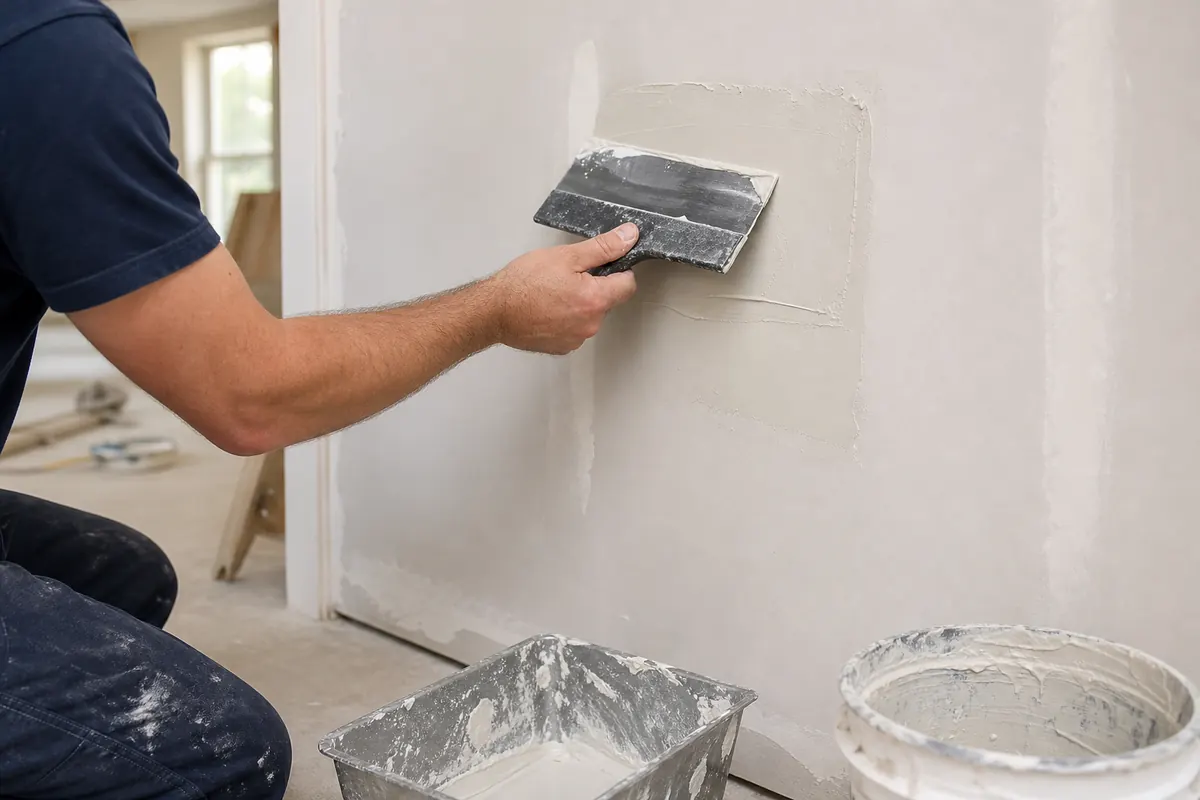
Every lived-in house has drywall damage somewhere. A picture hook that got moved three times, a doorknob that met the wall, a crack above a door that opens a little wider each winter. None of it is a disaster, but all of it shows once a fresh coat of paint goes on, and often shows more than it did before.
Alto Pro Painters repairs drywall as part of a paint job or as a job of its own. We patch, sand and prime, so the surface is smooth and even before colour goes on top. Homeowners, landlords, strata owners and small businesses across the South Okanagan call us when they want the wall fixed properly rather than hidden under paint.
What drywall repair includes
- Filling small holes from nails, screws and wall anchors
- Cutting and fitting patches for larger holes, such as doorknob damage or removed fixtures
- Re-setting or covering popped nails and screws that have worked their way out of the wall
- Re-taping and mudding joints where tape has loosened or lifted
- Repairing cracks, including the hairline kind that follow corners and door frames
- Smoothing damage left behind when tile, shelving or wallpaper has been removed
- Sanding every repair flush with the surrounding wall
- Priming repaired areas so the topcoat takes evenly and the patch does not show
How a drywall repair job goes
- Free written quote. We look over the walls and ceilings, note each spot that needs work and ask whether you plan to paint afterward. The free written quote lists the repairs, the prep and the timeline.
- Pre-job call. Before the start date we confirm the details and go over what to clear from the area. If anything looks like moisture damage, we ask about it so we can plan for it.
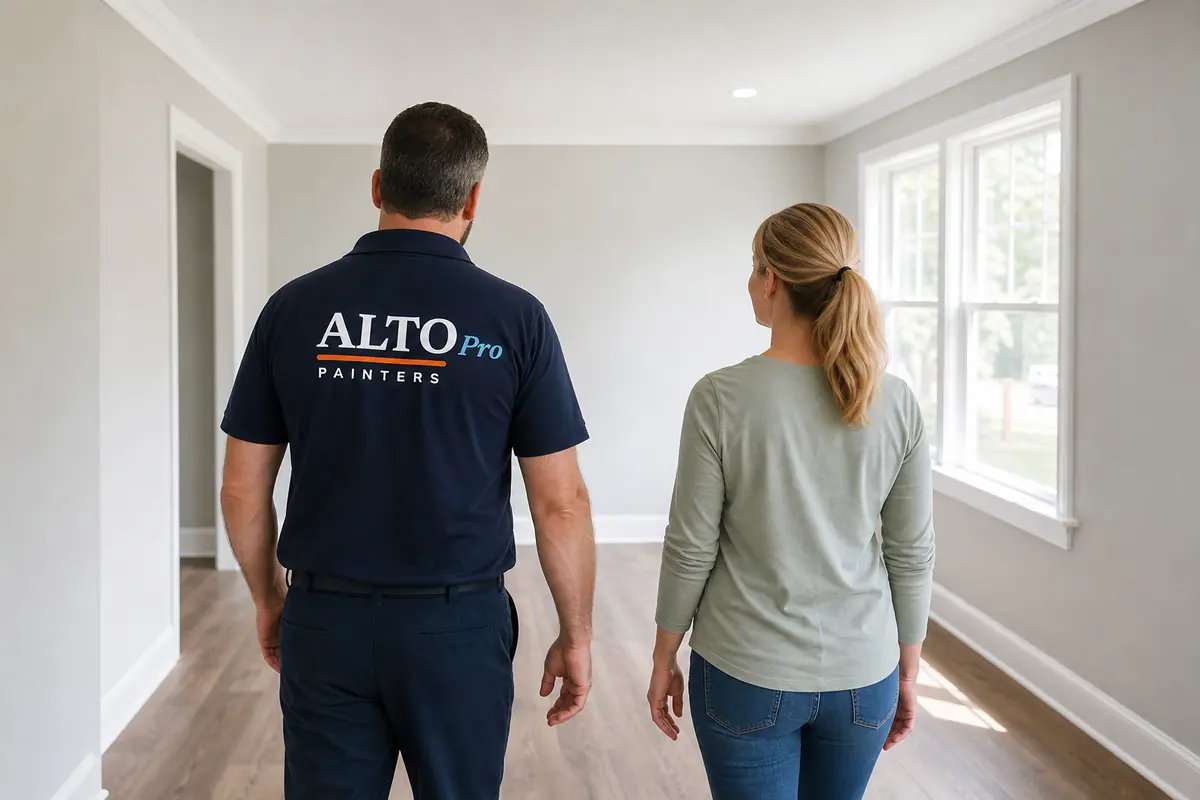
- Walk and mark. On the day we walk the space with you, cover floors and furniture and mark every spot that needs attention. It is the same check we do before any interior paint job.
- Patch and sand. Small holes are filled and sanded once dry. Larger ones get a measured patch, compound around the edges and over the top, and more than one thin coat so the repair blends into the wall.
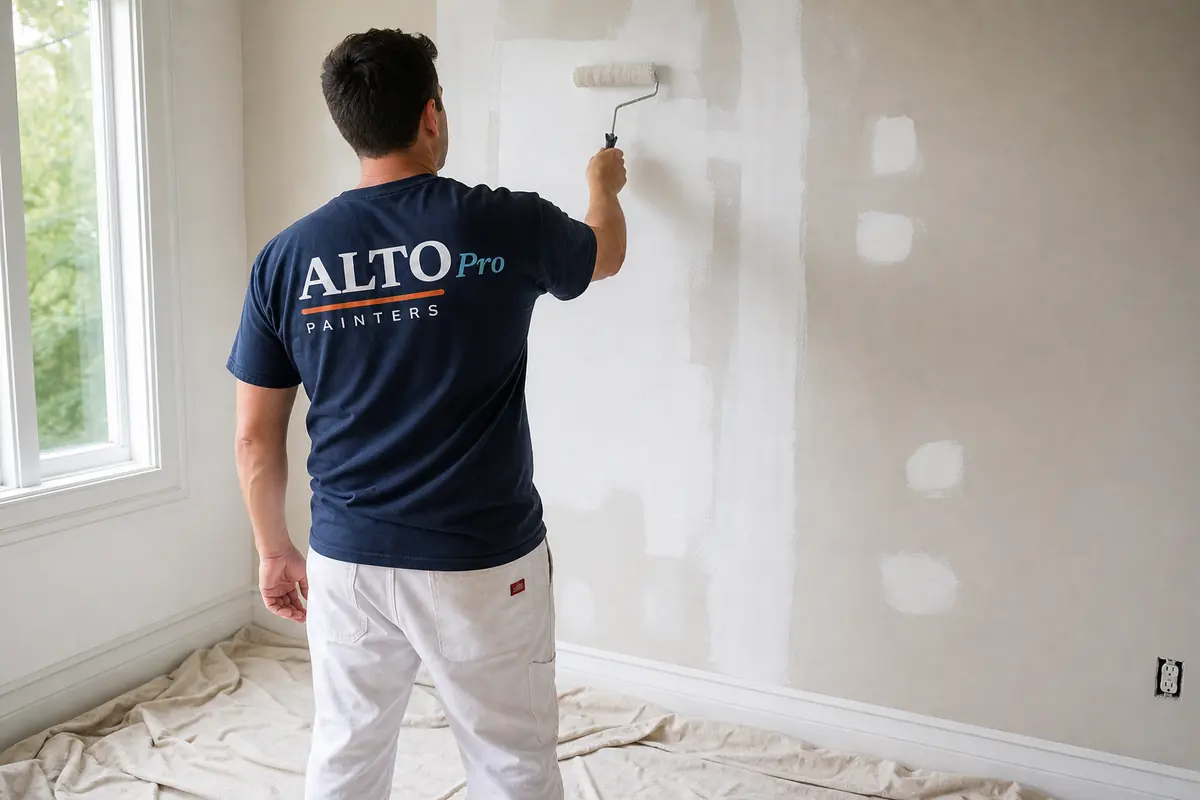
- Prime and walkthrough. We prime the repairs, then walk the walls with you in good light, check the edges and clean up after you sign off. If painting is part of the job, it follows.
Why the finishing work matters most
A repair is only as good as the last sanding pass. Compound that is left too thick shrinks and shows a ridge, and a patch that is not primed soaks up paint differently from the wall around it. This is called flashing, and it is the most common reason repaired spots reappear after painting.
- Cleaning dust and debris from the area so compound bonds properly
- Cutting damaged edges back to solid drywall instead of building over loose material
- Applying compound in thin layers and letting each one dry before the next
- Feathering the edges wide so the patch fades into the wall rather than forming a bump
- Sanding with a light touch and checking the surface with raking light, not just by eye
- Priming every repair so the finish coat has an even surface to sit on
Small fixes, patches and when to replace a section
The size of the damage decides the method. A nail hole needs only filler and a light sanding, which is a quick job. A hole the size of a fist needs a piece of drywall cut to fit, secured behind the opening and finished with compound and tape. Anything bigger, or any wall that has been wet, may be better replaced in full sheets than patched.
Texture is the other choice to make. If your walls have a knockdown, orange peel or other texture, a smooth patch will stand out even after painting. Tell us about the texture and we will talk through how closely it can be matched, and what finish suits the room. Flat or matte paint hides repair edges best, while glossier finishes show every ripple.
What affects the price of drywall repair
No two walls are in the same state, so we do not publish fixed prices. The written quote shows each of these so you can see where the work goes.
- The number of repairs and how large each one is
- Whether damage is on walls or ceilings, since ceilings are slower and harder to finish
- Existing texture that has to be matched
- The condition of joints and tape, and how much re-taping is needed
- Whether painting follows, which affects how the repair is primed and finished
- Access, such as stairwells, high ceilings and furniture that has to be moved
Moisture or mould behind the wall?
Drywall that has been wet, stained or soft is a sign of a leak. Patching over it will not fix the cause. Have the source of the water found and fixed first, and tell us what you know when you ask for your free written quote.
Common mistakes with drywall repair
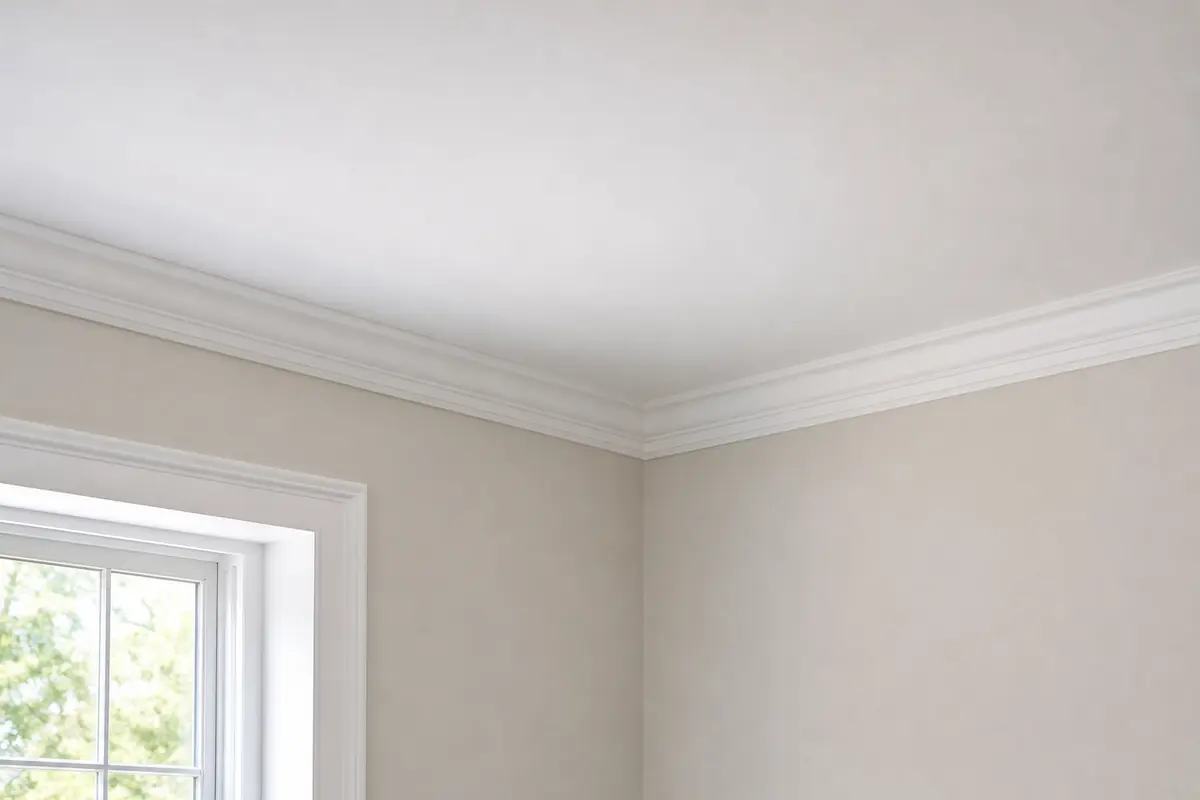
- Painting over damage without repairing it. Paint rarely covers dents and holes, and often makes them easier to see. We repair before we paint.
- Using one thick coat of compound to save time. It cracks, shrinks and leaves a ridge. We build repairs in thin layers.
- Skipping primer on the patch. The patch drinks paint differently from the wall and shows up as a dull spot. We prime every repair.
- Ignoring the cause. Cracks that keep coming back may point to movement, and stains point to water. We flag these instead of covering them up.
- Forgetting the lighting. A wall that looks fine at noon can show every flaw at night under a lamp. We check repairs in raking light before signing off.
Drywall Repair by town
We offer drywall repair in twelve Okanagan communities. Choose your town:
- Drywall Repair in Penticton
- Drywall Repair in Summerland
- Drywall Repair in Naramata
- Drywall Repair in Kaleden
- Drywall Repair in Okanagan Falls
- Drywall Repair in Oliver
- Drywall Repair in Osoyoos
- Drywall Repair in Keremeos
- Drywall Repair in Peachland
- Drywall Repair in West Kelowna
- Drywall Repair in Kelowna
- Drywall Repair in Lake Country
Drywall Repair questions
Do I need drywall repair before painting?
If there are holes, dents, cracks or popped fasteners, yes. Paint does not fill or hide them. Fixing the surface first is what gives the paint job a smooth, even look.
Can you fix a hole from a doorknob?
Yes. We cut a patch to fit, secure it, apply compound around and over it, then sand it smooth once dry. It is a common repair and not a large job.
Will the patch show after painting?
Not if it is sanded, primed and finished well. Texture and sheen can still make a patch visible, which is why we ask about both.
How long does drywall repair take?
Compound needs to dry between coats, so even small repairs usually take more than one visit or a full day. Your written quote includes a timeline.
Do you repair water-damaged drywall?
We can repair or replace the damaged section once the leak is fixed and the area is dry. We do not repair over active moisture.
Is the quote free?
Yes. It is free and in writing, and lists the repairs, the prep and the timeline before any work begins.
Related services
A smooth wall is the foundation of a good paint job. Show us what needs fixing and request a free written quote.
Request your free written quote or call (778) 946-0386.
Guides for drywall repair
- How to Remove a Popcorn Ceiling
- Metallic Paint, Glazes and Feature Walls: What to Know
- What a Professional Repaint Does for a Home
Curious how a job runs from the first call to the final walkthrough? Read how our painting process works.
Have a question first? Read the FAQ, learn about Alto Pro Painters or contact us.
Further reading: Drywall on Wikipedia and Joint compound on Wikipedia.
Watch: drywall repair in action
How to patch a drywall hole, by This Old House on YouTube.